

Artificial Intelligence Official Machine Learning Blog of Amazon Web Services
- Building trust in AI agents: A production-ready evaluation framework with Amazon Bedrock AgentCore
 by Rui Li on October 16, 2026 at 8:48 pm
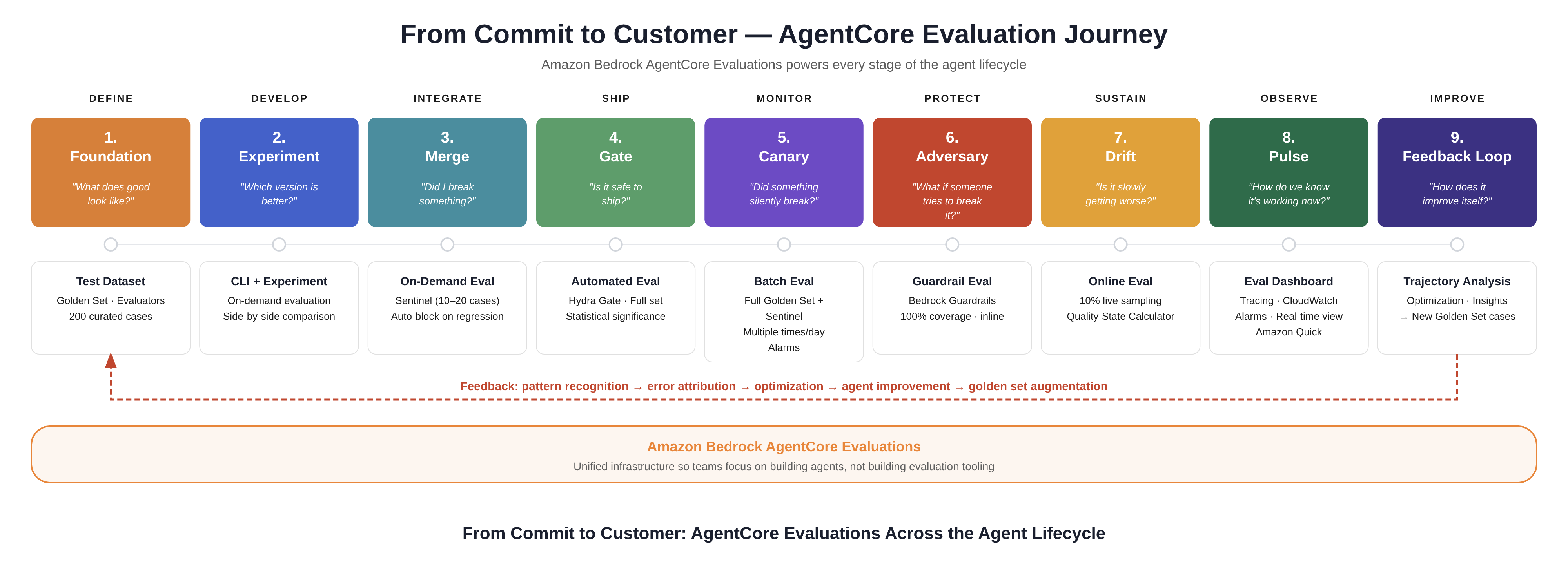
Autonomous AI agents fail softly: latency stays flat while answer quality quietly erodes. This post shares a nine-stage evaluation framework, built on Amazon Bedrock AgentCore, that catches silent quality regressions across the full agent lifecycle, from first commit to live production.
- Introducing Reflection Beam: an open-weight model for agentic coding on AWS
 by Clement Perrot on October 16, 2026 at 3:23 pm
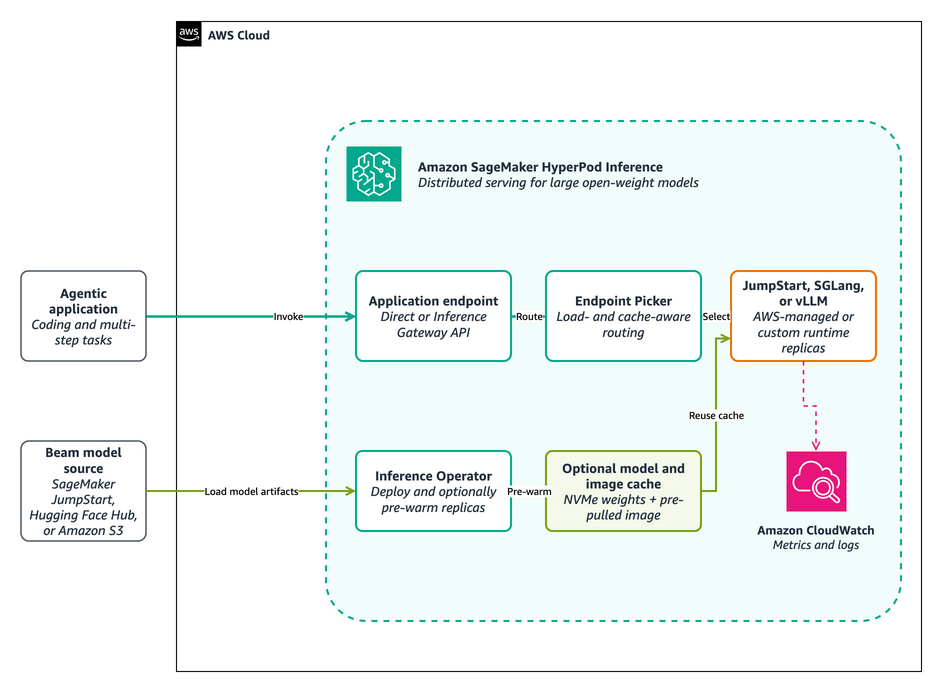
Reflection AI’s Beam is an open-weight model for agentic coding and long-horizon tasks. This post shows how to deploy Beam on AWS: start with an Amazon SageMaker JumpStart real-time endpoint, or use Amazon SageMaker HyperPod Inference with JumpStart, SGLang, or vLLM for Kubernetes-native control over distributed GPU infrastructure.
- Meta’s Muse Spark Open now available in Amazon SageMaker JumpStart
 by Aris Tsakpinis on October 15, 2026 at 5:43 pm
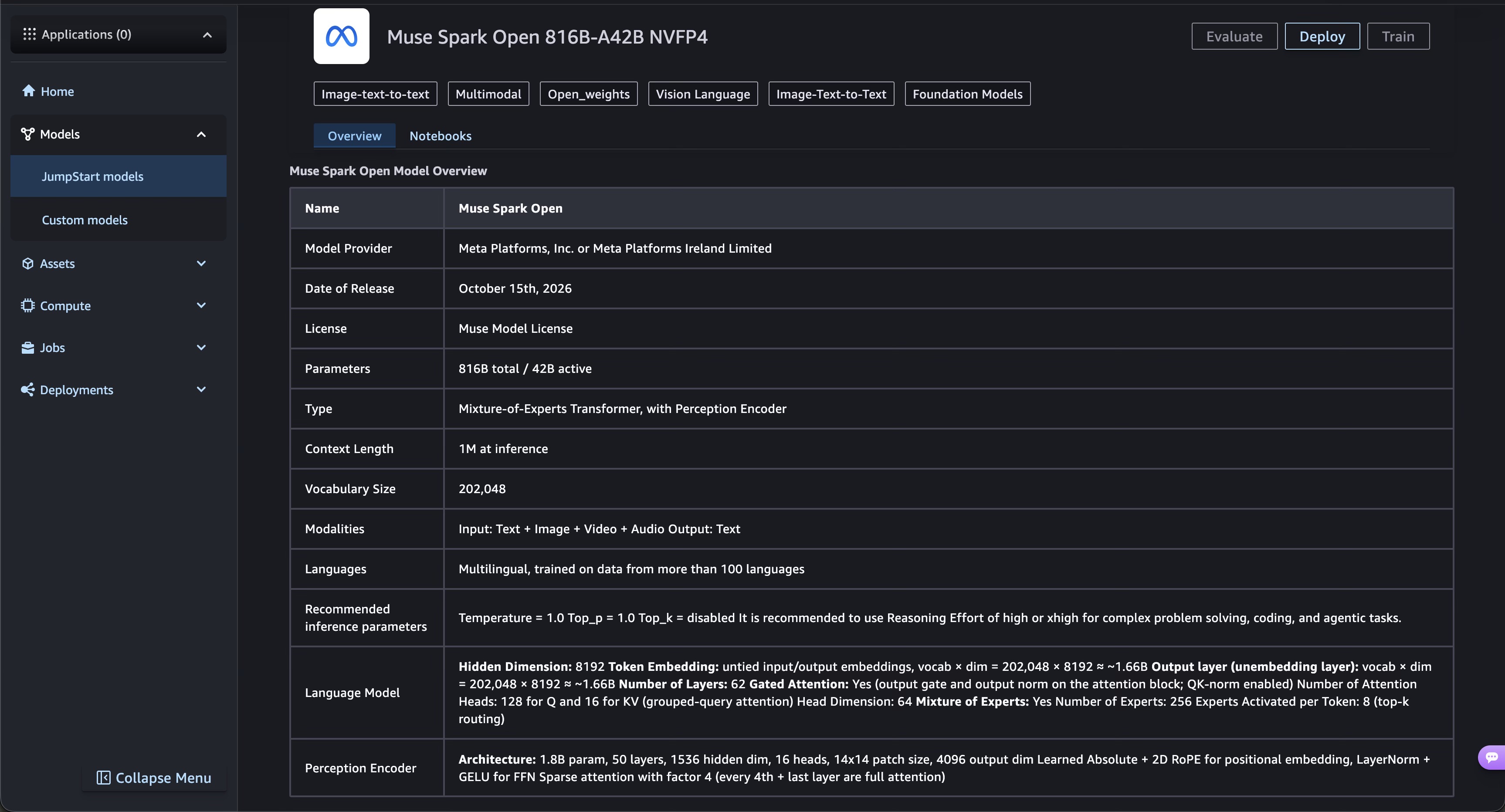
Muse Spark Open, Meta’s coding-optimized open-weight model, is now available in Amazon SageMaker JumpStart. Deploy it to a SageMaker AI endpoint in your own AWS account using SageMaker Studio or the SageMaker Python SDK, and run your first inference request.
- Trust in Depth: Giving agents more autonomy without losing control
 by Shawn Bice on October 15, 2026 at 3:05 pm
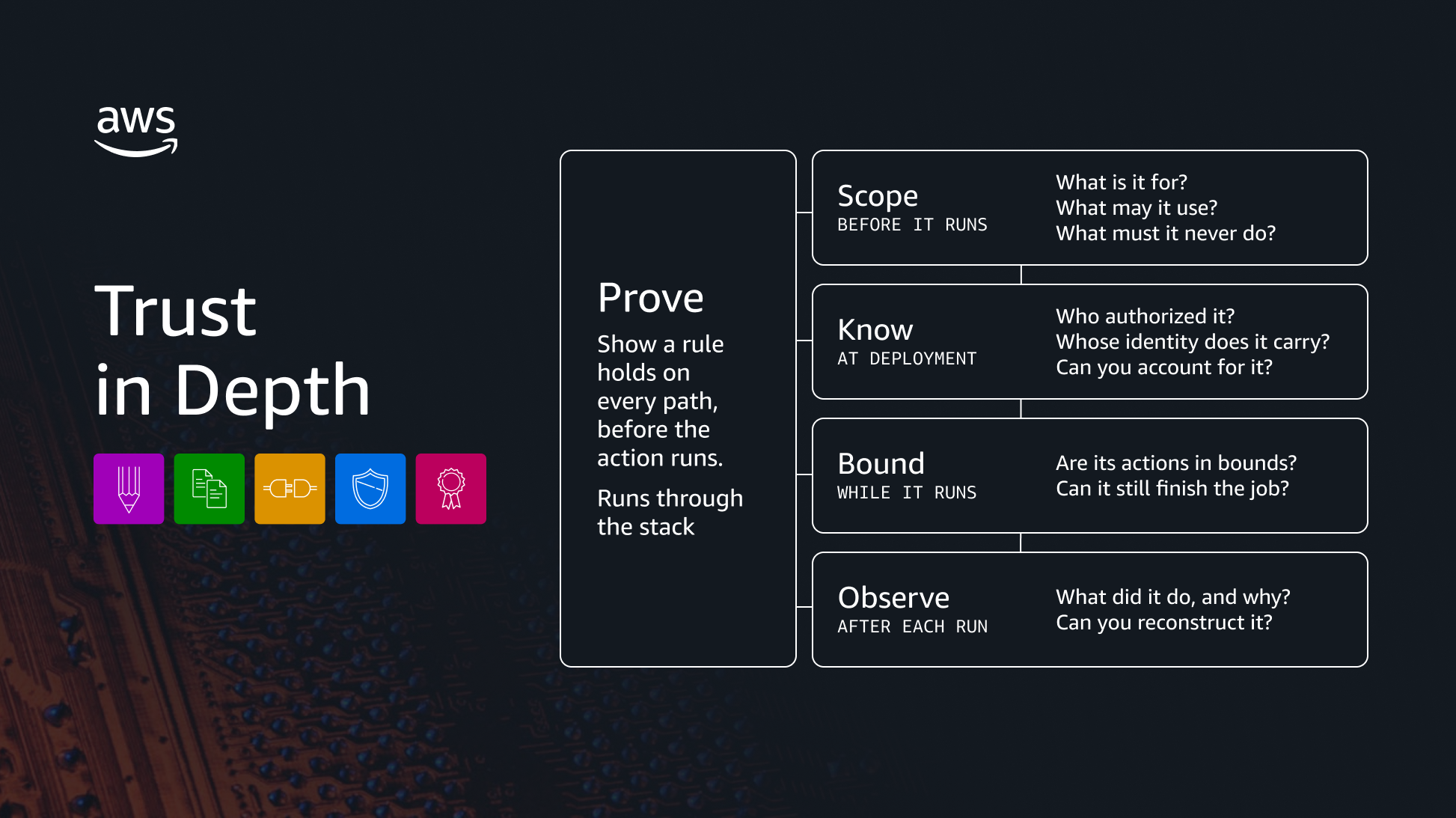
Enterprise leaders want AI agents to take on more work but don’t fully trust them to act correctly every time. Trust in Depth is AWS’s layered approach-scope, know, bound, observe, and prove-that lets agents act on their own when their actions can be verified, reserving human judgment for the decisions that need it.
- Build self-improving document processing using Amazon Bedrock AgentCore
 by Erik Cordsen on October 14, 2026 at 4:24 pm
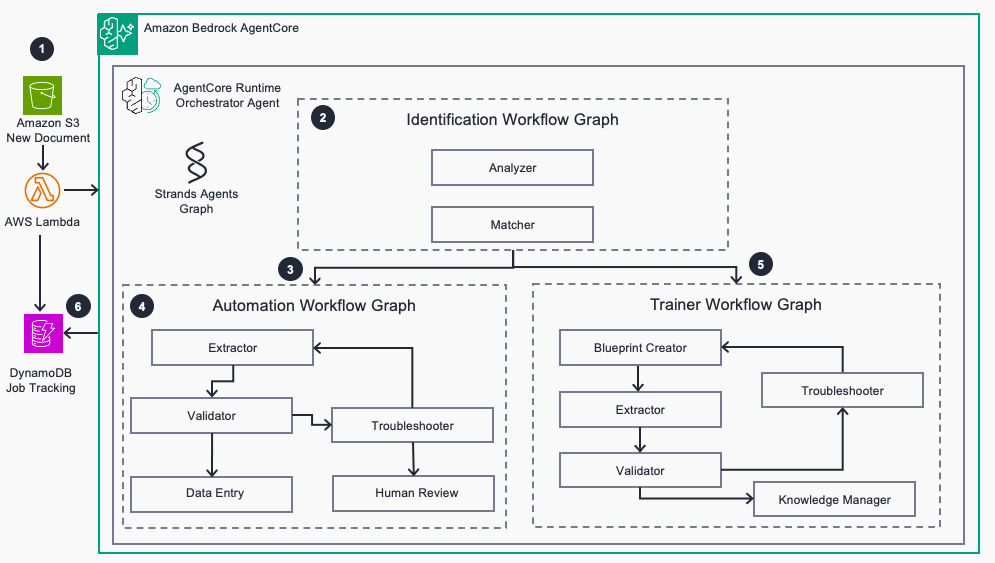
Learn how to build an agentic intelligent document processing (IDP) system using Amazon Bedrock AgentCore that classifies, extracts, validates, and learns from business documents with minimal human intervention, automatically handling new document formats without manual template configuration.
- Generate presentations with Amazon Bedrock AgentCore
 by Ian Lunsford on October 14, 2026 at 1:58 pm
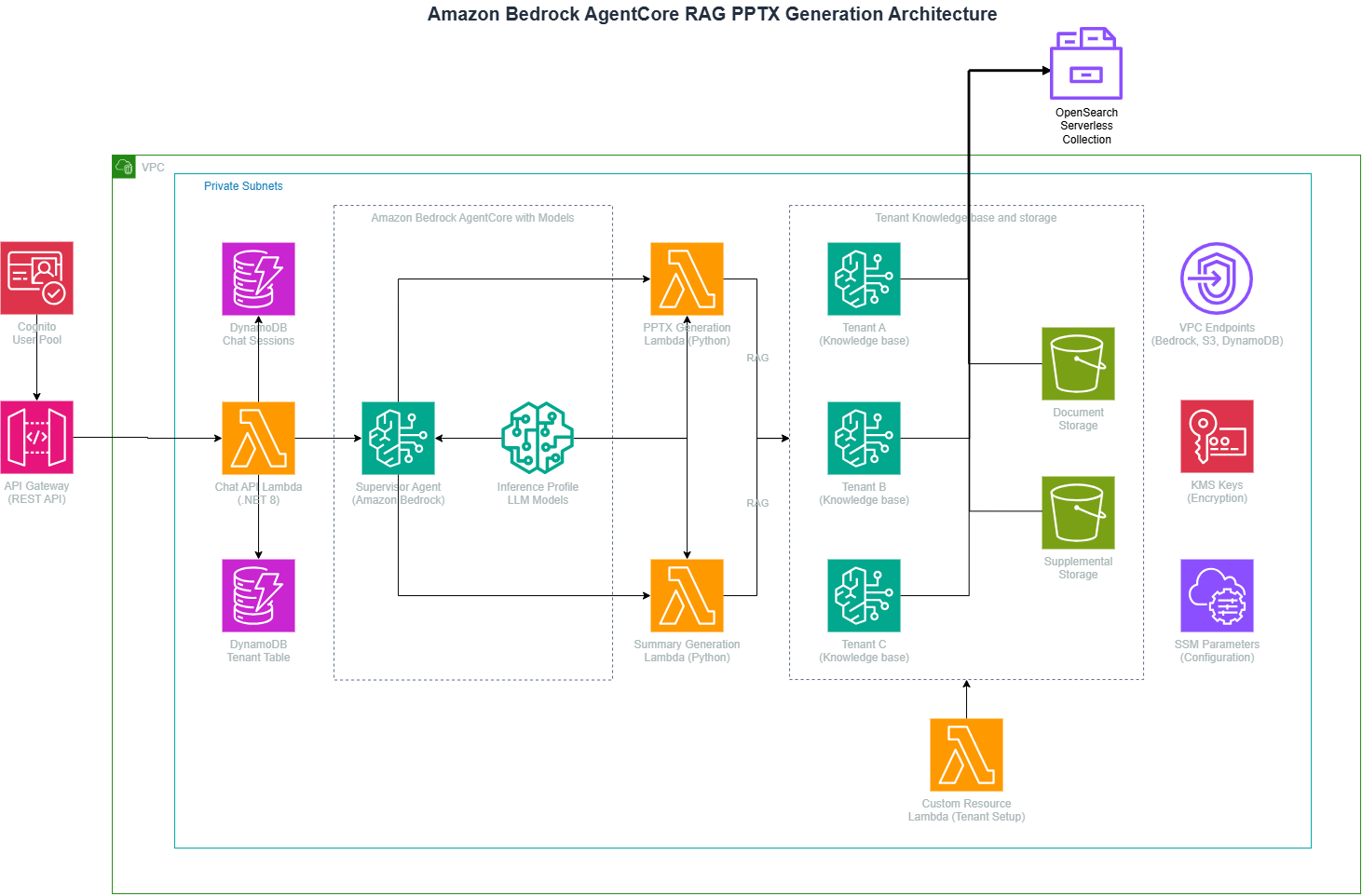
This post walks you through building an AI agent system with Amazon Bedrock AgentCore that automates PowerPoint presentation creation from enterprise documents. A supervisor agent, Retrieval Augmented Generation, and Amazon Bedrock Guardrails generate grounded presentations in under 90 seconds.
- How Tamnoon built AI-powered cloud security remediation with Amazon Bedrock
 by Ishara Premadasa on October 14, 2026 at 1:53 pm
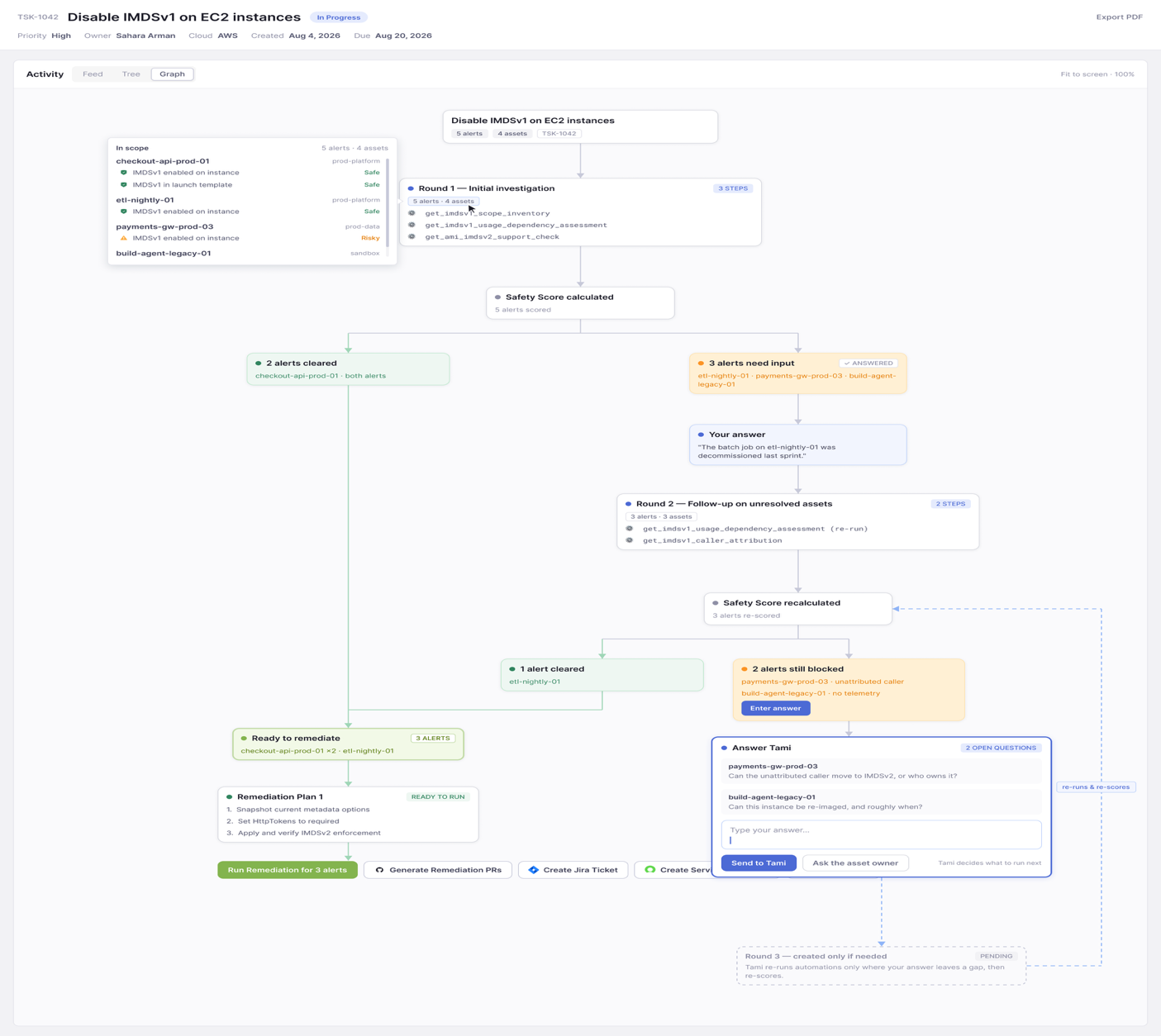
Learn how Tamnoon built Tami, an agentic cloud remediation orchestrator on Amazon Bedrock that autonomously investigates and safely remediates cloud security findings from CNAPP and cloud-native sources. The approach drove a 90%+ reduction in critical cloud exposure in 90 days with zero production issues.
- Deploy and evaluate models with Amazon SageMaker JumpStart
 by Vamsi Goparaju on October 14, 2026 at 1:14 pm
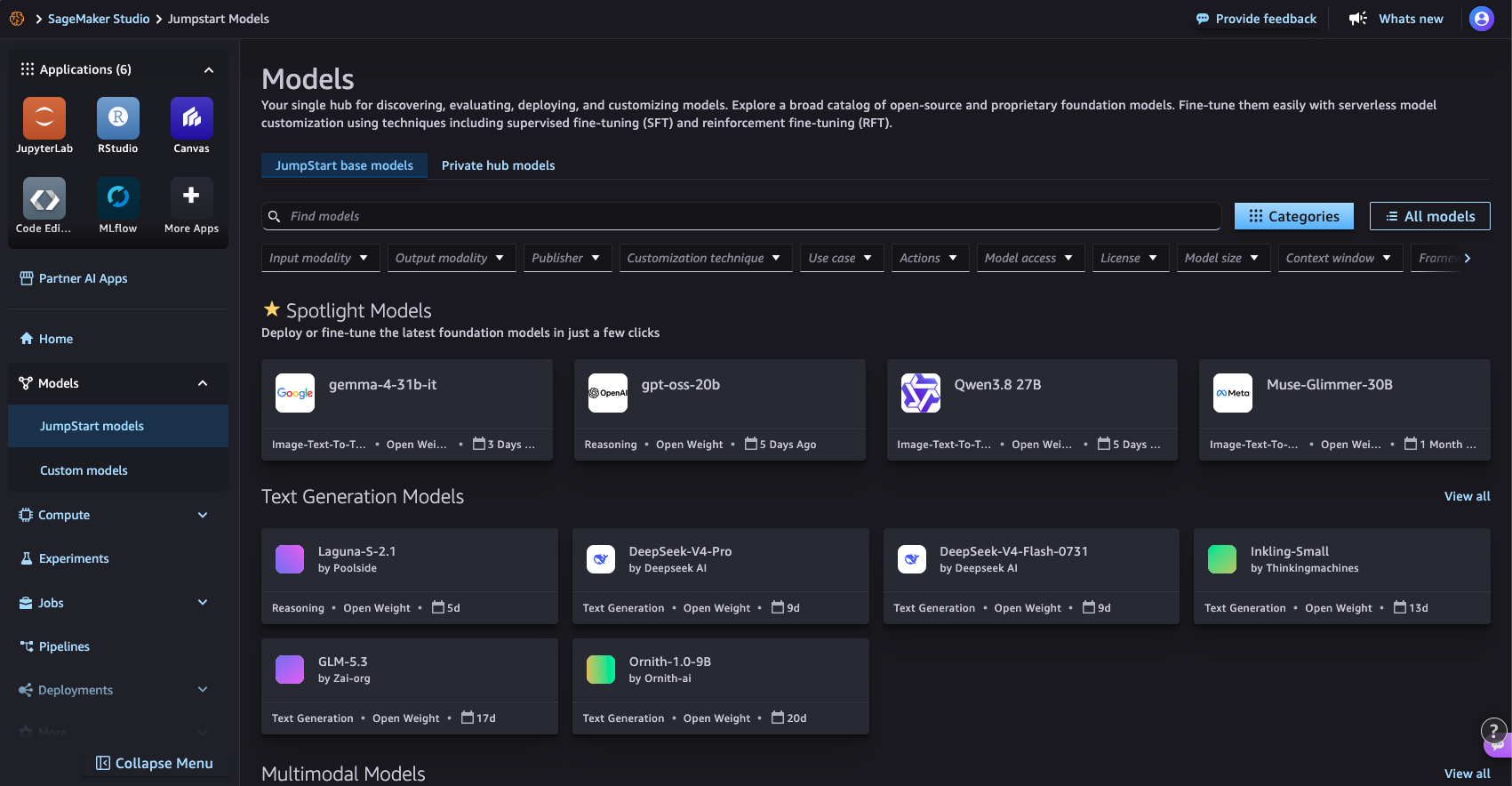
Learn how to deploy an available model from Amazon SageMaker JumpStart, run a lightweight and repeatable performance test using the SageMaker Python SDK, and delete the endpoint when testing is complete.
- Building agents that transact with Anchor Browser and AgentCore payments
 by Cher Simon on October 13, 2026 at 8:10 pm
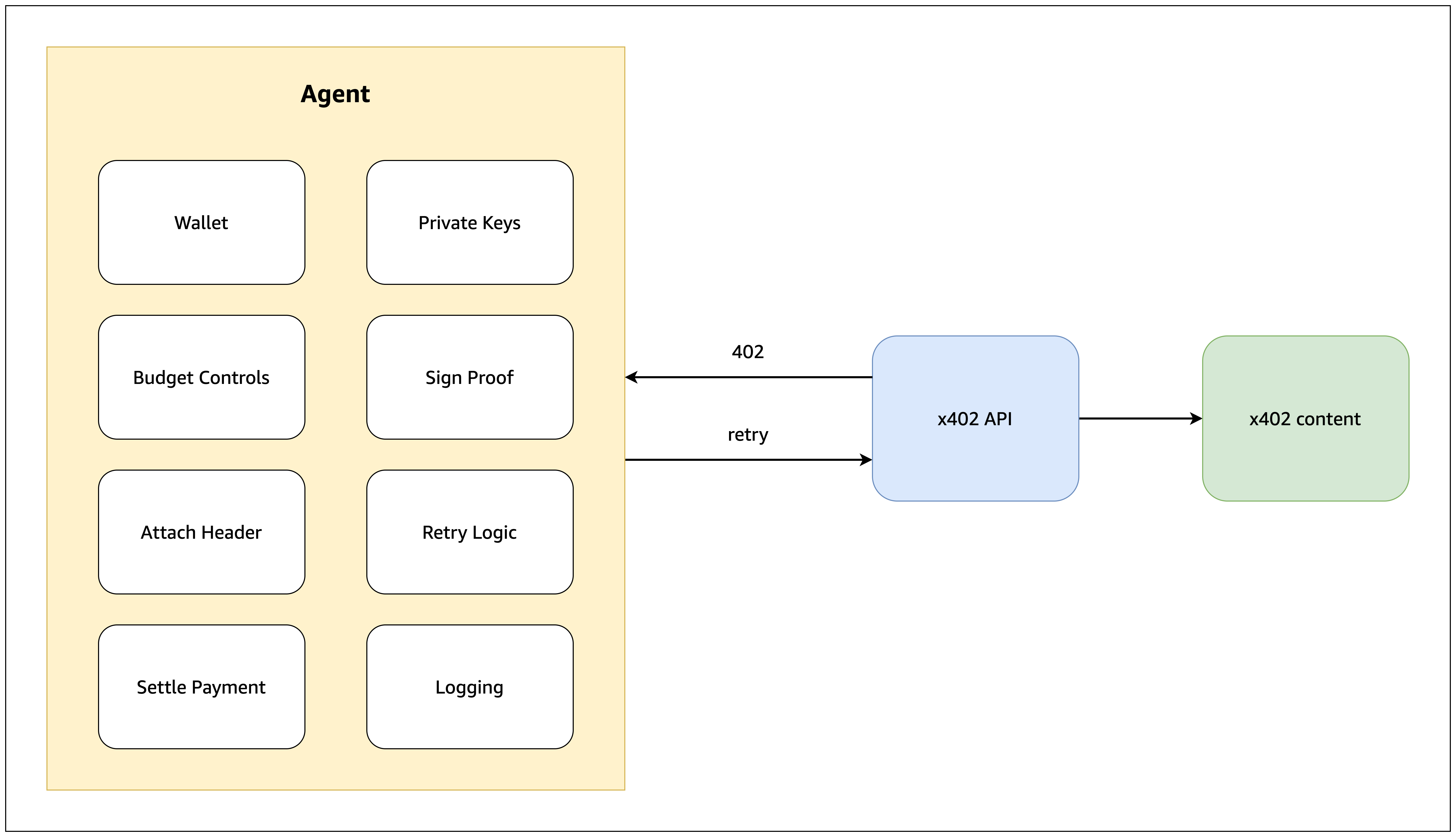
Learn how the AWS Generative AI Innovation Center Partner Agent Factory and Anchor Browser built AI agents that autonomously pay for x402-protected web resources and APIs. Amazon Bedrock AgentCore payments checks budgets, signs transactions, and retries requests without exposing wallet credentials to the agent runtime.
- Manage private pricing offers for Amazon Bedrock with managed entitlements
 by Daniel Wirjo on October 13, 2026 at 5:17 pm
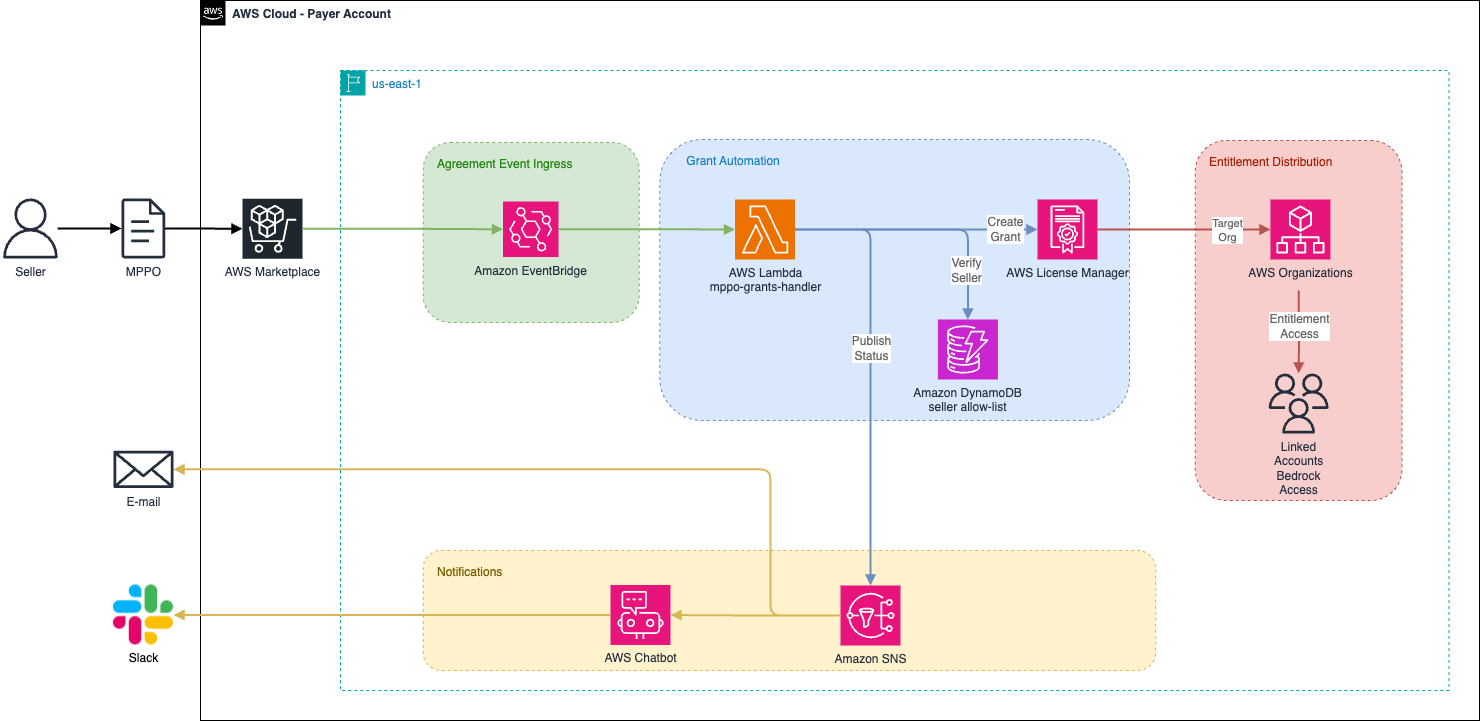
Managing AI model access across dozens or hundreds of AWS accounts creates friction when each account must accept AWS Marketplace Private Pricing Offers individually. This post shows two ways to activate MPPO entitlements in AWS License Manager: a lightweight script for a one-time fix, and CDK automation for ongoing event-driven processing.
- Natural language security queries at Orca Security using Amazon Bedrock
 by Deniz Yilmaz on October 13, 2026 at 4:03 pm
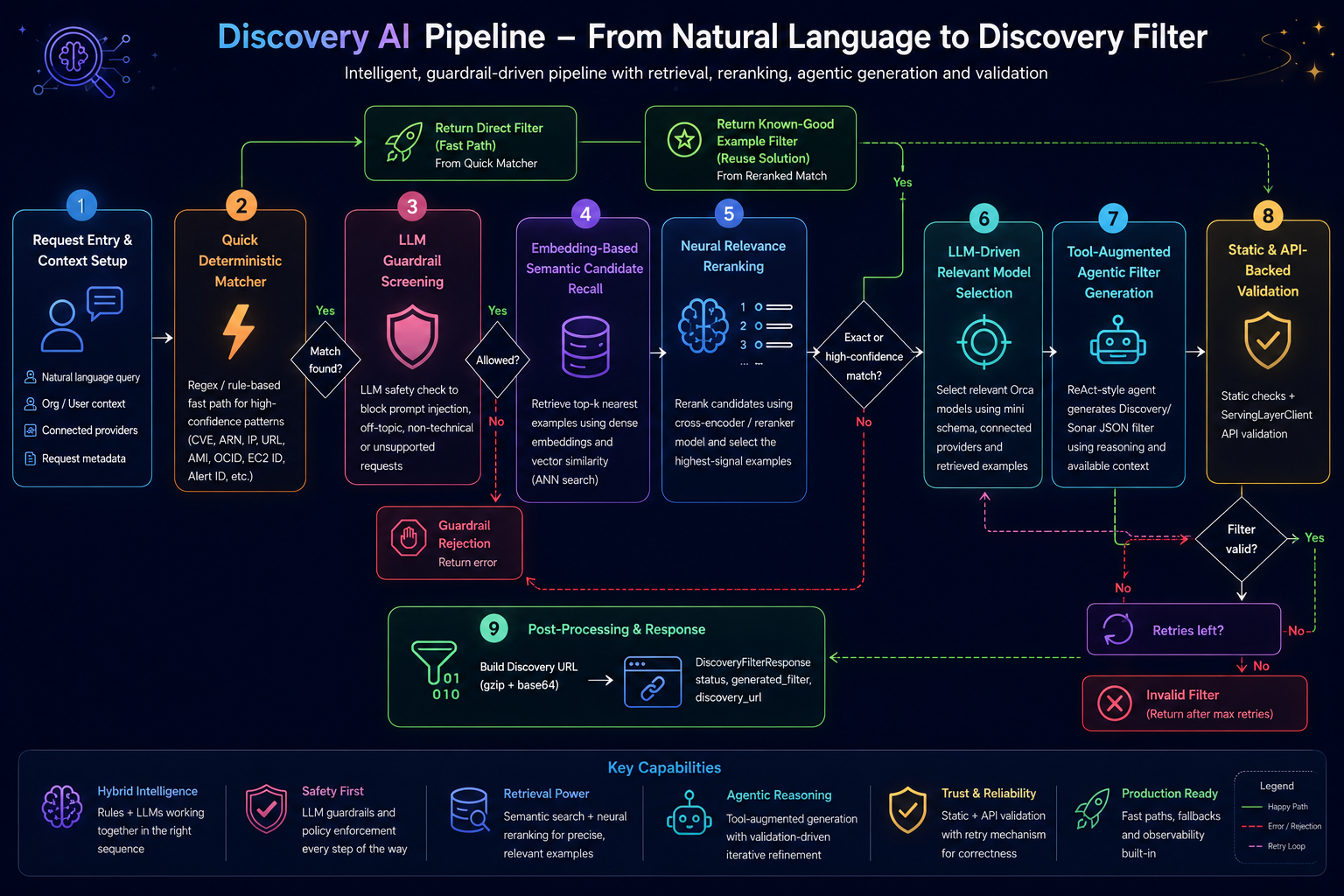
Orca Security built Discovery AI, a natural language query agent on Amazon Bedrock that converts plain-English questions into Sonar queries. The post shares the multi-stage architecture and the results: 90% lower query cost, 93% fewer input tokens, and 75% lower latency than the initial baseline.
- How ShipStation Global built an AI IT help desk on Amazon Bedrock AgentCore
 by Kenneth Salmon on October 13, 2026 at 3:54 pm
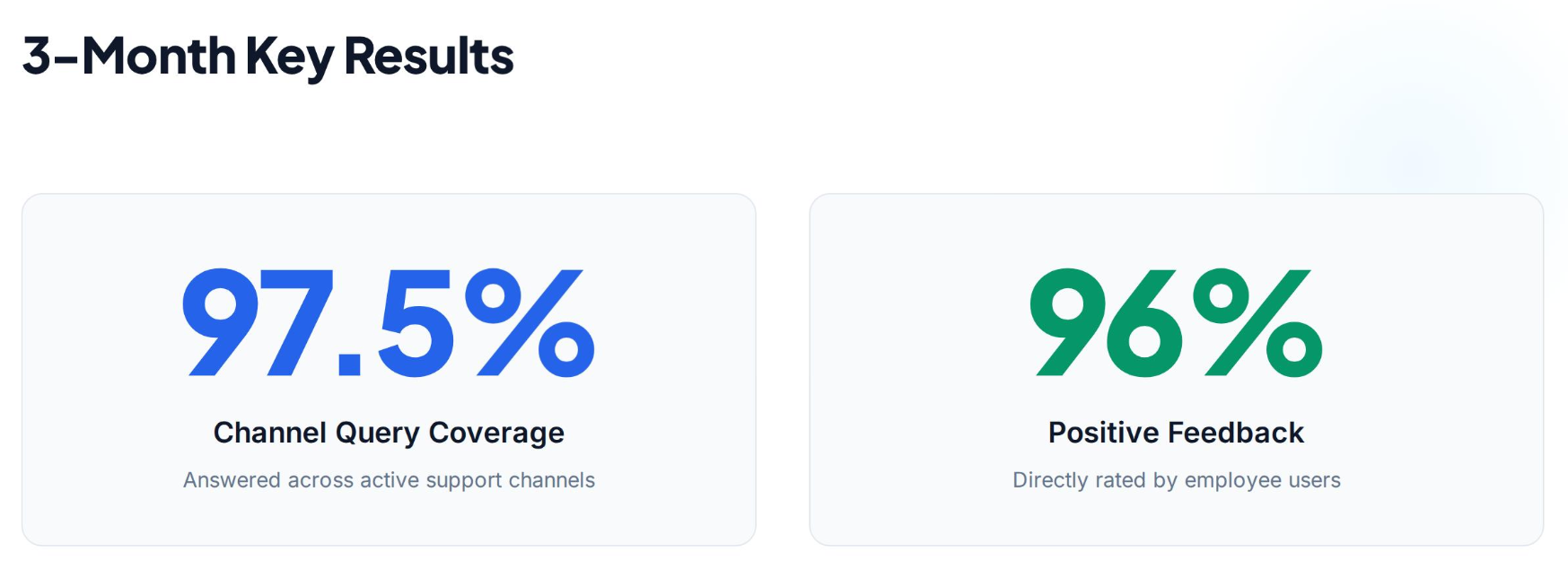
ShipStation Global’s engineering team built Deckhand, an AI IT help desk agent for Slack on Amazon Bedrock AgentCore. It answers routine IT questions from a curated knowledge base, reads error-message screenshots, and files Jira tickets. In its first three months it resolved 97.5% of channel queries with a 96% positive feedback rating.
- Build long-horizon agents with Grok 4.7 on Amazon Bedrock
 by Suheel Farooq on October 13, 2026 at 3:52 pm
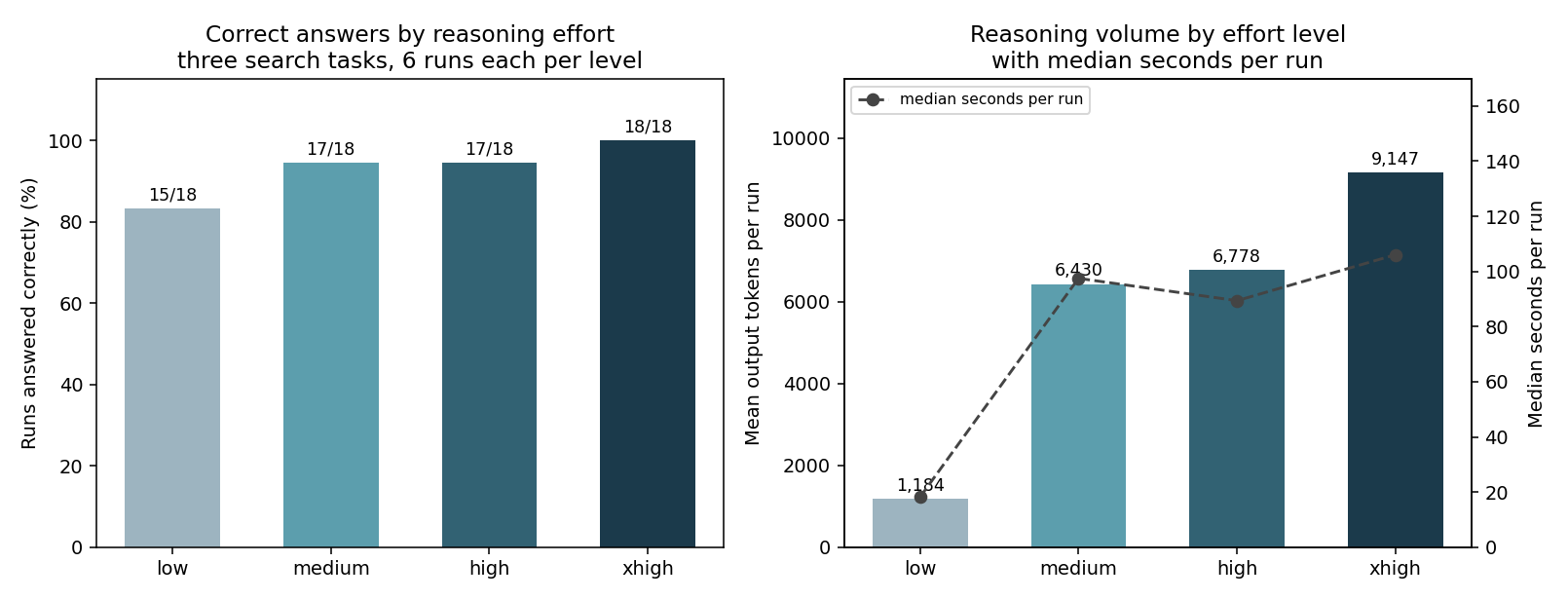
Grok 4.7 is now available on Amazon Bedrock. In this post, we build a tool-calling agent on Grok 4.7 and evaluate it on three reasoning tasks at four reasoning effort levels, measuring correctness and token cost per completed task. We show how to tune the trade-off per request and monitor it in production.
- Mixture-of-Experts kernel engineering on Amazon SageMaker AI
 by Mona Mona on October 13, 2026 at 3:17 pm
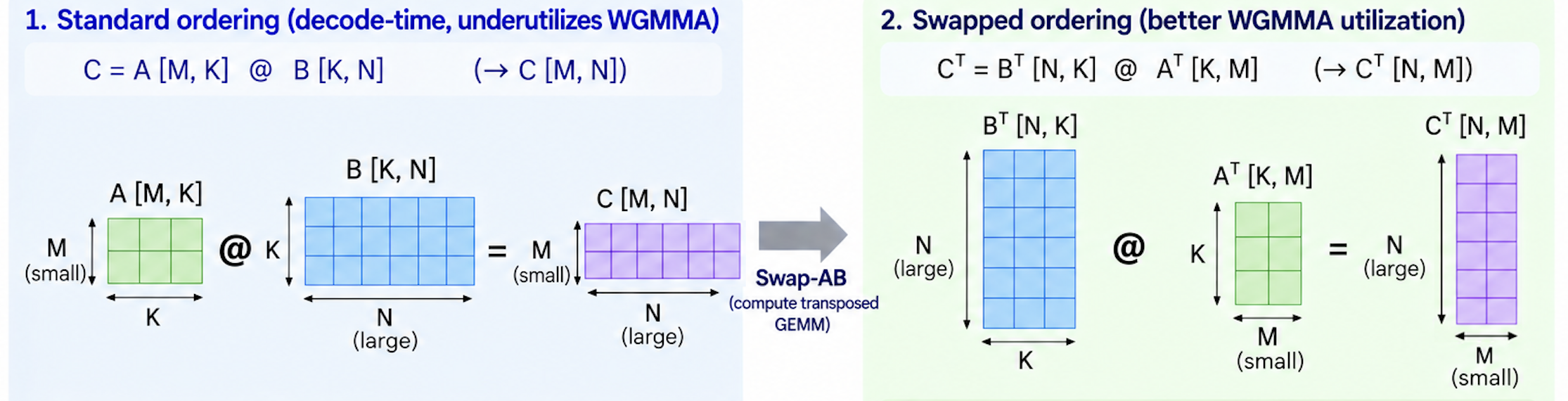
AWS engineers share kernel optimizations for fused Mixture-of-Experts (MoE) models on Amazon SageMaker AI: Swap-AB for WGMMA utilization, Triton backend routing for FP8 quantization, and eliminating Triton JIT recompilation. Together they deliver up to 10% higher throughput and up to 9% faster Time to First Token on H200 GPUs.
- Accessing OpenAI GPT models on Amazon Bedrock with global cross-Region inference in Thailand, Malaysia, Singapore, Indonesia, and Taiwan
 by Traci Lim on October 12, 2026 at 5:52 pm
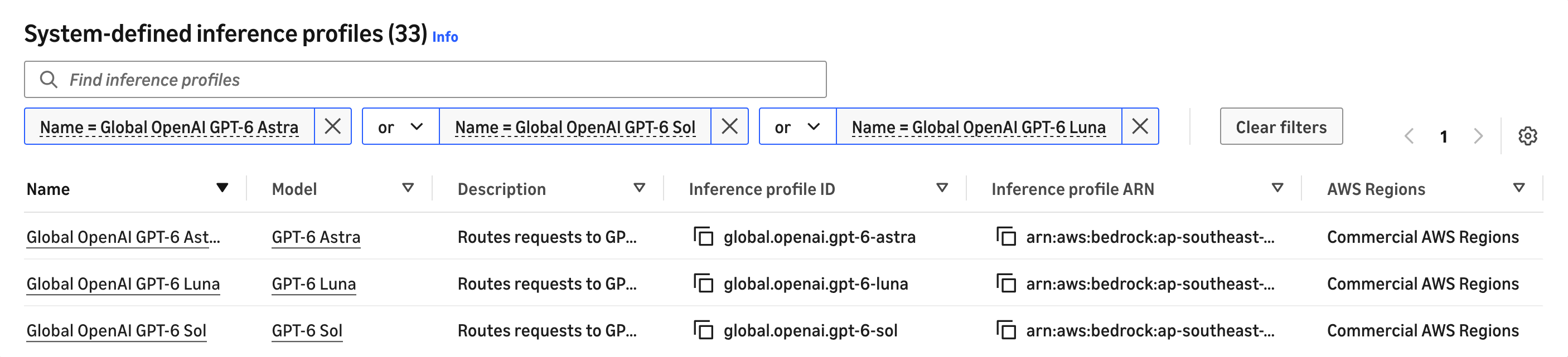
Learn how to run OpenAI GPT-6 Sol, Luna, and Astra on Amazon Bedrock through global cross-Region inference from Singapore, Jakarta, Thailand, Malaysia, and Taipei. This post covers the Converse and OpenAI-compatible APIs, IAM and SCP permissions, quota sizing, and monitoring inference from your source Region.
- Deploy decision models with llama.cpp on Amazon SageMaker AI
 by Jyothirmai Kottu on October 12, 2026 at 3:51 pm
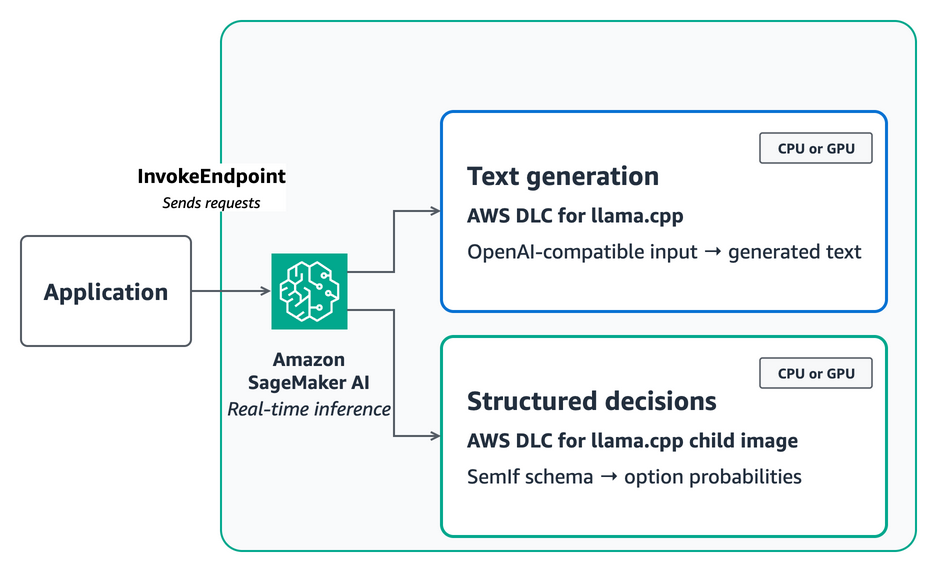
Learn how to deploy decision models with llama.cpp on Amazon SageMaker AI. This technical how-to serves OpenAI-compatible chat completions with the AWS Deep Learning Container for llama.cpp, then extends the runtime with SemIf to return probabilities over declared options on CPU or GPU.
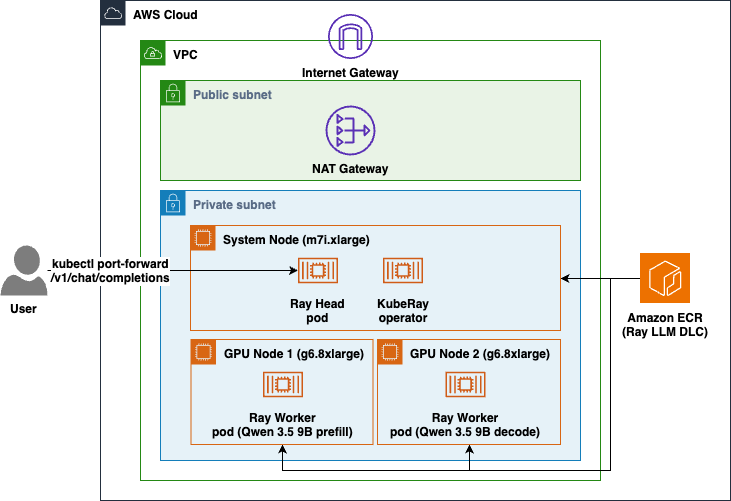
- Run multi-node inference workloads using Ray LLM Deep Learning Containers
 by Ananth Raghavendra on October 12, 2026 at 3:50 pm
Learn how to deploy one large language model across two GPU nodes on Amazon EKS using the multi-node Ray LLM Deep Learning Containers, with separate prefill and decode nodes behind one OpenAI-compatible endpoint. The pre-built container ships the full inference stack, so you configure the deployment instead of assembling it.
- ICYMI: What landed for AI builders in September 2026
 by Prachi Mishra on October 9, 2026 at 3:38 pm
A monthly recap of the latest Amazon Bedrock, Amazon Bedrock AgentCore, and Strands updates from September 2026: broader model choice, faster serverless agents with built-in evaluation, and automated knowledge base syncing with native enterprise connectors.
- How Postman runs Agent Mode for 40 million developers on Amazon Bedrock
 by Srinivas Kini on October 9, 2026 at 3:35 pm
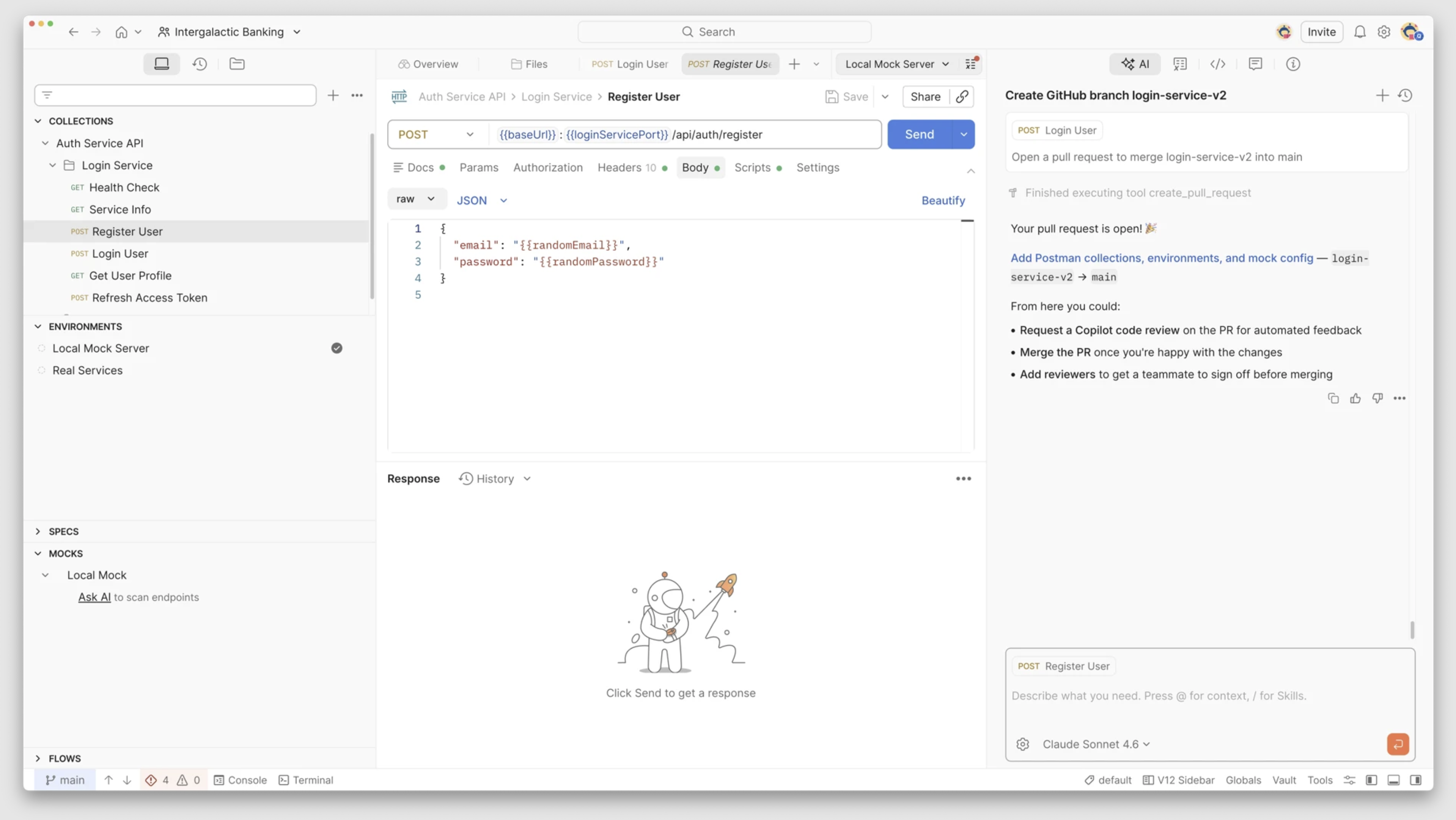
Building an AI agent that works in a demo is a different problem from running one for 40 million developers. Postman and AWS share the architectural patterns behind Agent Mode: controlling tool sprawl, exposing schema-based reads, and treating context as the real bottleneck, plus how it runs on Amazon Bedrock at scale.
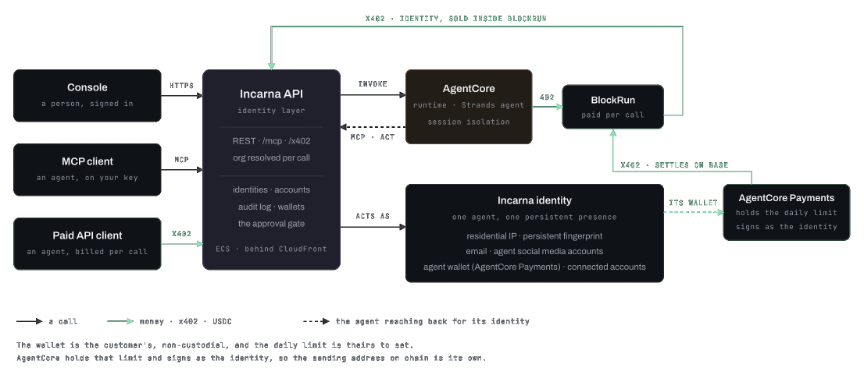
- Pay-per-inference for AI agents: How BlockRun and Incarna use Amazon Bedrock AgentCore payments
 by Peter Jiang on October 8, 2026 at 6:33 pm
Amazon Bedrock AgentCore payments gives AI agents a managed way to pay for services on demand, with spending limits enforced by the infrastructure. See how Incarna’s agents pay BlockRun for model inference one request at a time over x402, cutting the work of adding x402 payment support from months to days.