
- Human rights could improve – or worsen – based on how nations use the UN treaty against cybercrime
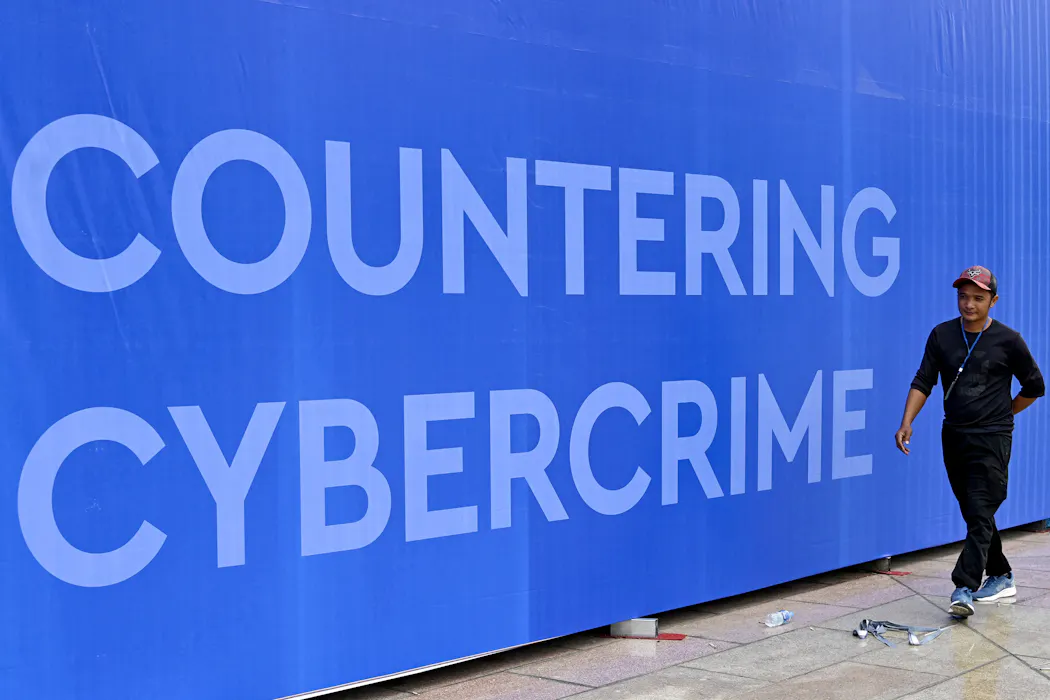 by Meridith LaVelle, Research Fellow in Political Science, University of Mannheim on October 21, 2026 at 12:47 pm
If the treaty enters into force, responsible nations will have to carefully monitor how other countries use it.
- Last year, Floridians over 60 lost nearly $710M to cybercrime – here’s what to do if you or a loved one has been scammed
 by Angela Ramos, Lecturer in Information and Technology Management, University of Tampa on September 29, 2026 at 12:44 pm
Cybercrime is getting increasingly sophisticated, and scammers target senior citizens.
- Housing stress is on the rise: 7 essential charts from this year’s HILDA survey
 by Roger Wilkins, Professorial Fellow and Co-Director, HILDA Survey, Melbourne Institute of Applied Economic and Social Research, The University of Melbourne on September 23, 2026 at 8:09 pm
The high cost of housing is also keeping half of young adults up to age 29 living with their parents.
- Britain’s quarter century: crime falls, sea-levels rise and education yet to recover from COVID
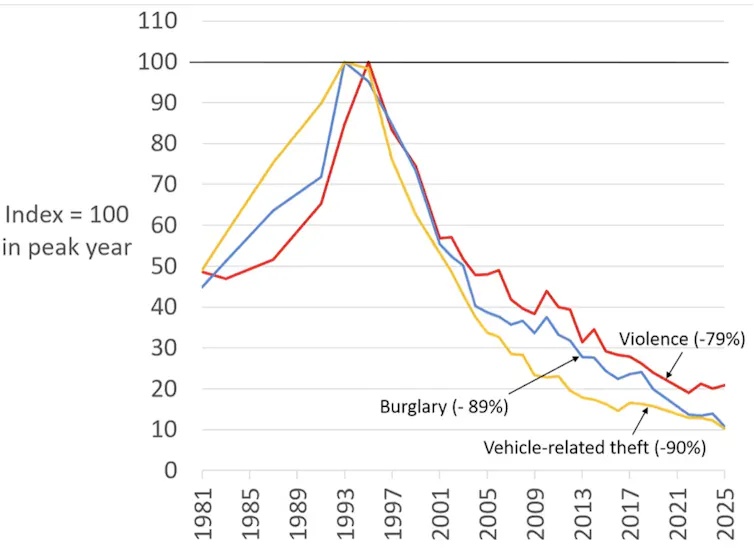 by Graham Farrell, Professor of Crime Science, University of Leeds on August 25, 2026 at 12:48 pm
How big policy areas like crime, education, transport and energy have changed.
- How a new UN cybercrime treaty could be used to crack down on dissent
 by Miniature Malekpour, Research assistant, criminal justice, University of Sydney on August 5, 2026 at 2:41 am
Even with human rights safeguards in place, the new convention risks giving authoritarian regimes new tools to target their critics.
- What is a side-channel attack? A cybersecurity researcher explains how computers can leak secrets without being hacked
 by Chetan Jaiswal, Associate Professor of Computer Science, Quinnipiac University on July 30, 2026 at 12:12 pm
Hackers have easier ways of getting information out of a computer, but side-channel vulnerabilities show that technology developers need to take a broad view of security.
- New study shows 1 in 7 people have been victims of sextortion – and AI is making it worse
 by Nicola Henry, Professor of Global & Language Studies, RMIT University on June 17, 2026 at 8:12 pm
Sextortion is a form of online blackmail where a perpetrator coerces or tricks a victim into sending intimate images. New research shows it’s on the rise.
- Forced labour in west African cybercrime academies: how fear traps young men
 by Suleman Lazarus, Visiting Fellow, Mannheim Centre for Criminology, London School of Economics and Political Science on June 11, 2026 at 1:56 pm
Understanding what drives recruitment into these academies is not a defence of fraud. It is a precondition for dismantling it.
- From floppy discs to Claude Mythos, how ransomware grew into a multibillion-dollar industry
 by Anja Shortland, Professor in Political Economy, King’s College London on April 21, 2026 at 3:20 pm
The first piece of ransomware was sent it out on 20,0000 floppy discs in 1989, to raise awareness of health- rather than cyber-hygiene.
- Inside Southeast Asia’s scam compounds: A trafficked worker tells of fraud, coercion and torture
 by Randall Hansen, Professor, Canada Research Chair in Global Migration & Director of the Global Migration Lab, University of Toronto on April 15, 2026 at 1:04 pm
Not all victims of scam compounds are unwilling —and that’s what makes the system so hard to dismantle.
- Fake QR codes make for easy scams – be careful what you scan out there
 by Meena Jha, Head Technology and Pedagogy Cluster CML-NET, CQUniversity Australia on April 9, 2026 at 1:07 am
QR codes are so familiar and widespread, we tend to trust them without question. That’s exactly what scammers rely on.
- From joyrides to assault, ‘crimefluencer’ networks are coercing young people into breaking the law
 by Xanthe Weston, Criminologist, CQUniversity Australia on April 8, 2026 at 4:00 am
Young people are being coerced into performing violent acts on themselves, family members or their pets, with vision of these crimes often shared online.
- Human traffickers are using football dreams to lure young Ghanaian men to Nigeria – how to stop it
 by Suleman Lazarus, Visiting Fellow, Mannheim Centre for Criminology, London School of Economics and Political Science on March 15, 2026 at 8:10 am
Intra-African trafficking, particularly through digital deception and aspirational manipulation, remains largely invisible.
- Afrobeats celebrates cybercrime and it’s becoming a global problem
 by Suleman Lazarus, Visiting Fellow, Mannheim Centre for Criminology, London School of Economics and Political Science on March 12, 2026 at 3:01 pm
Some Afrobeats songs use moral language that softens and normalises cybercrime.
- Crime is no longer just a local issue – that’s why a national police force is needed
 by Estelle Marks, Assistant Professor in Criminology, University of Sussex; King’s College London on February 2, 2026 at 4:33 pm
Even crime we think of as ‘local’ can exploit force boundaries.
- Ransomware: what it is and why it’s your problem
 by Thembekile Olivia Mayayise, Senior Lecturer, University of the Witwatersrand on January 18, 2026 at 5:57 am
Ransomware is a growing threat on the continent. There are a number of steps companies can take to combat it.
- Forensic linguistics: how dark web criminals give themselves away with their language
 by Emily Chiang, Research Associate, Aston Institute for Forensic Linguistics, Aston University on November 14, 2025 at 4:59 pm
Unmasking dark web criminals isn’t easy, but researchers are figuring out how to use their own language against them.
- Online age checking is creating a treasure trove of data for hackers
 by Mark Tsagas, Senior Lecturer in Law, Cybercrime & AI Ethics, University of East London on November 11, 2025 at 5:19 pm
Selfies with passports or drivers’ licences can open users to sophisticated forms of fraud.
- As long as the cybercriminals’ business model works, companies are vulnerable to attack
 by Ayman El Hajjar, Senior Lecturer & Head of the Cyber Security Research Group, University of Westminster on October 7, 2025 at 3:46 pm
Cybercrime is now a service that crooks can pay for to target businesses for extortion.
- Tanzania’s social media clampdown and the elections – what’s at risk
 by Leah Mwainyekule, Lecturer, University of Westminster on September 25, 2025 at 1:36 pm
Tanzania favours information control over transparency and accountability.
- What are ShinyHunters, the hackers that attacked Google? Should we all be worried?
 by Jennifer Medbury, Lecturer in Intelligence and Security, Edith Cowan University on September 2, 2025 at 11:58 pm
With cyber crime groups constantly shifting tactics and getting creative, we all must stay vigilant – especially if we work at large companies.
- Cyber crime and real-world crime are converging in a dangerous new way – here’s how to stay safe
 by Jongkil Jay Jeong, Senior Fellow, School of Computing and Information System, The University of Melbourne on July 10, 2025 at 12:56 am
What happens next when your data is leaked in a data breach like the one at Qantas? Cyber criminals have creative ways to get what they want.
- Archetyp was one of the dark web’s biggest drug markets. A global sting has shut it down
 by Elena Morgenthaler, PhD Candidate, School of Criminology and Criminal Justice, Griffith University on June 23, 2025 at 8:08 pm
Shutdowns like this have become a recurring feature of the dark web. They are usually not a significant turning point.
- Airbnb scams: new book explores thriving criminal activity on big tech platforms
 by Julie Reid, Professor, University of South Africa on June 1, 2025 at 7:15 am
A new book draws on over 600 cases of users tricked by fake listings and fake reviews, scammed out of money or placed in physical danger.
- M&S cyberattack: how can retailers regain customers’ trust after a hack? A marketing expert explains
 by Kokho Jason Sit, Senior Lecturer in Marketing; Associate Head (Global), University of Portsmouth on May 20, 2025 at 4:39 pm
Honesty is the best policy when planning a crisis response.

Cybercrime



We are an ethical website cyber security team and we perform security assessments to protect our clients.