
- Restart EC2 and on-premises fleets faster with AWS CodeDeploy RESTART deployment mode
 by Iskandar Anvarov on October 5, 2026 at 3:46 pm
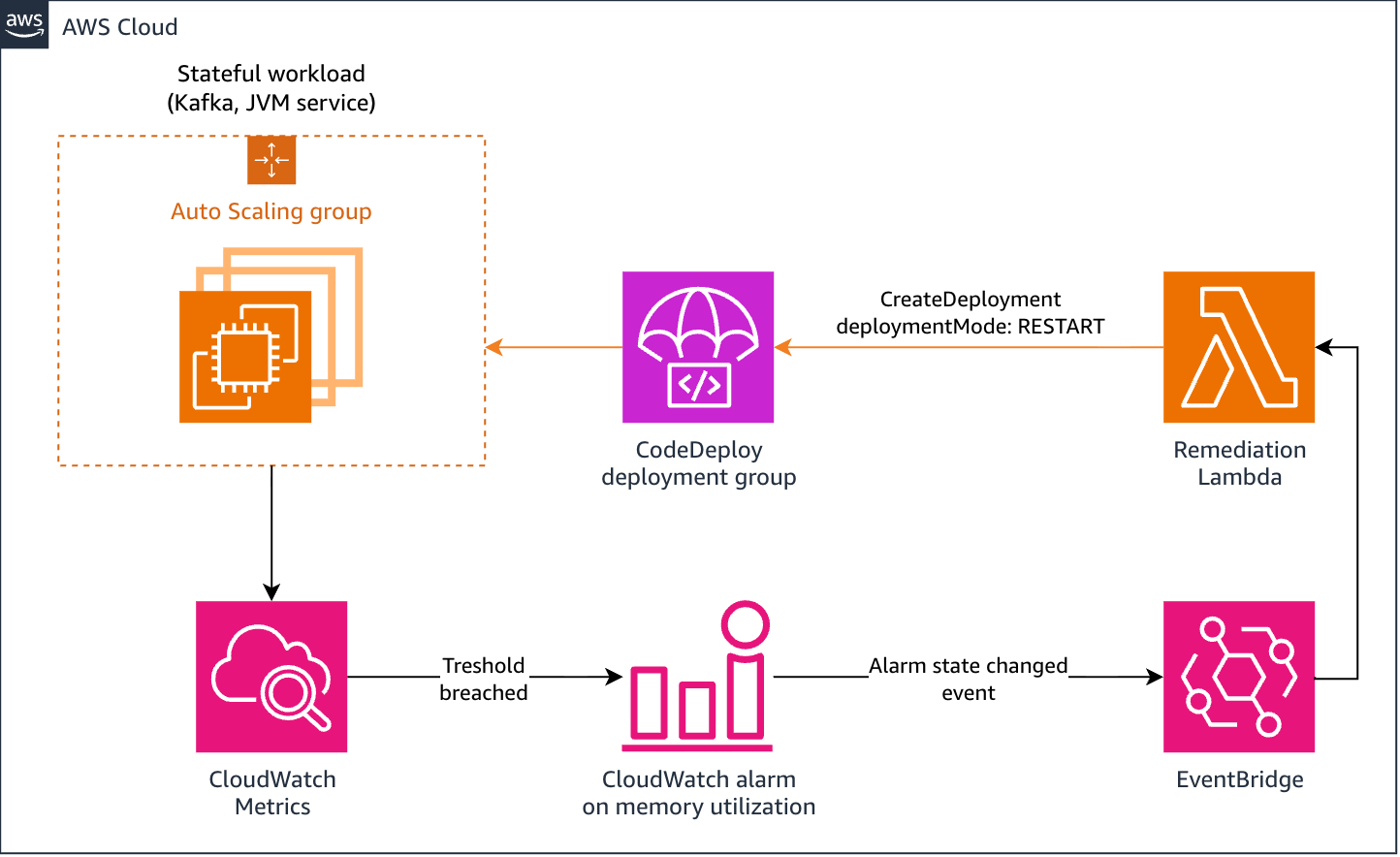
AWS CodeDeploy now offers a purpose-built RESTART deployment mode that reapplies the last successful revision to EC2 and on-premises fleets. It keeps restarts inside CodeDeploy with the same batch sizing, health checks, alarm monitoring, and rollback behavior as a standard deployment, and ran up to 6.1x faster in testing.
- Integrate AWS DevOps Agent with third-party tools using Amazon EventBridge
 by Toshihiro Furuno on October 2, 2026 at 3:50 pm
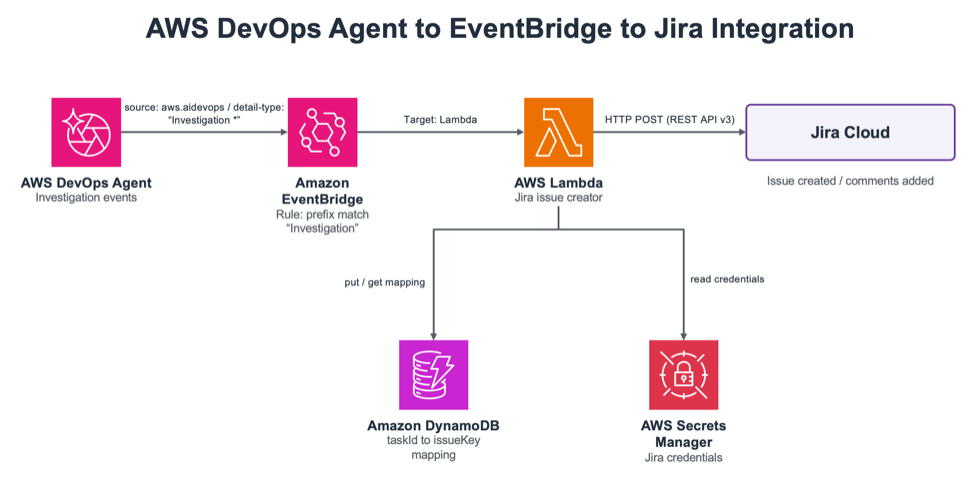
Learn how to connect AWS DevOps Agent investigation events to third-party tools such as Jira using Amazon EventBridge and AWS Lambda. This post walks through a deployable AWS CDK solution that automatically creates and updates Jira issues as an investigation progresses, and shows how to adapt the same pattern to ServiceNow, PagerDuty, and other tools.
- Closed-loop incident response: connect AWS DevOps Agent to OpenSearch
 by Sitaraman Vijay Krishna on October 2, 2026 at 3:24 pm
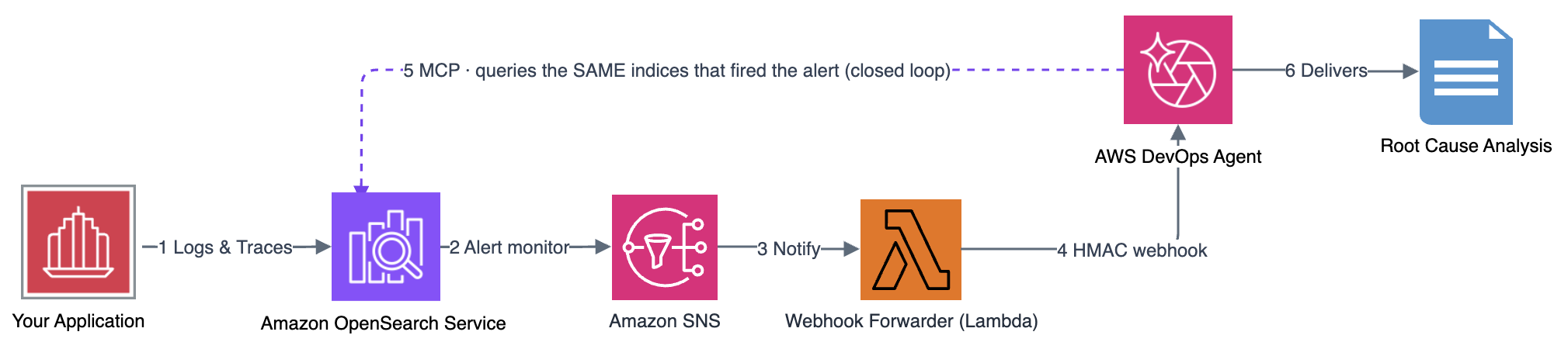
Connect AWS DevOps Agent to your Amazon OpenSearch Service observability data using the Model Context Protocol (MCP), so an alert that fires at 2 AM triggers autonomous root cause investigation. Covers three MCP server hosting paths (self-managed on Amazon ECS, Amazon Bedrock AgentCore, or built-in OpenSearch 3.3+), plus alert routing and FGAC role mapping.
- How Mirelo AI brought sound design to the IDE with MCP and Kiro powers
 by Florian Breton on October 1, 2026 at 2:49 pm
Mirelo AI turned its hosted Model Context Protocol (MCP) server into a Kiro power, so developers can generate production-ready sound effects from a natural-language prompt without leaving their IDE. Learn how Mirelo built the integration and how AWS Enterprise Support helped bring it to the Kiro powers marketplace.
- Running production experiments with AWS AppConfig experimentation
 by Aparna Krishnamoorthy on September 30, 2026 at 7:45 pm
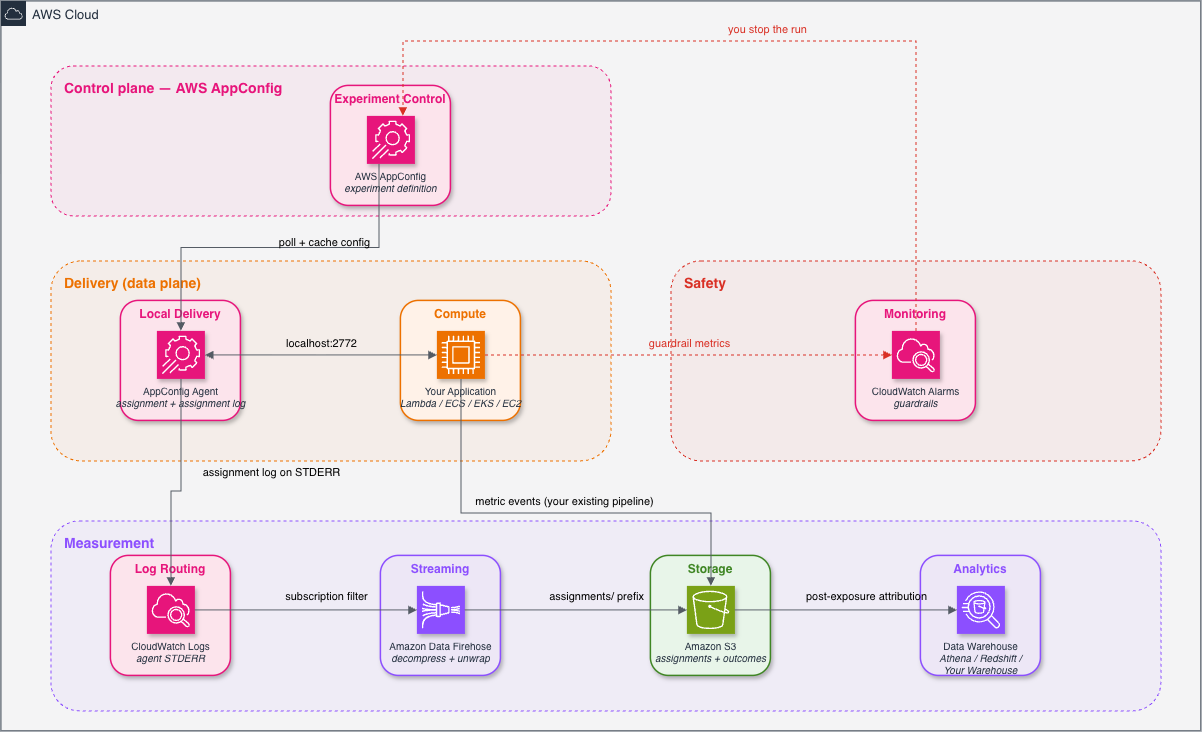
A redesigned checkout button is meant to lift sales. A longer cache time to live (TTL) is meant to cut backend load. But until you test a change against real production traffic, decisions come down to intuition and whoever argues hardest, not evidence. With AWS AppConfig experimentation, you can make data-driven calls instead: using A/B
- Accelerating AS/400 business rule extraction with Kiro: Step-by-step guide
 by Daniel Gray on September 30, 2026 at 3:43 pm
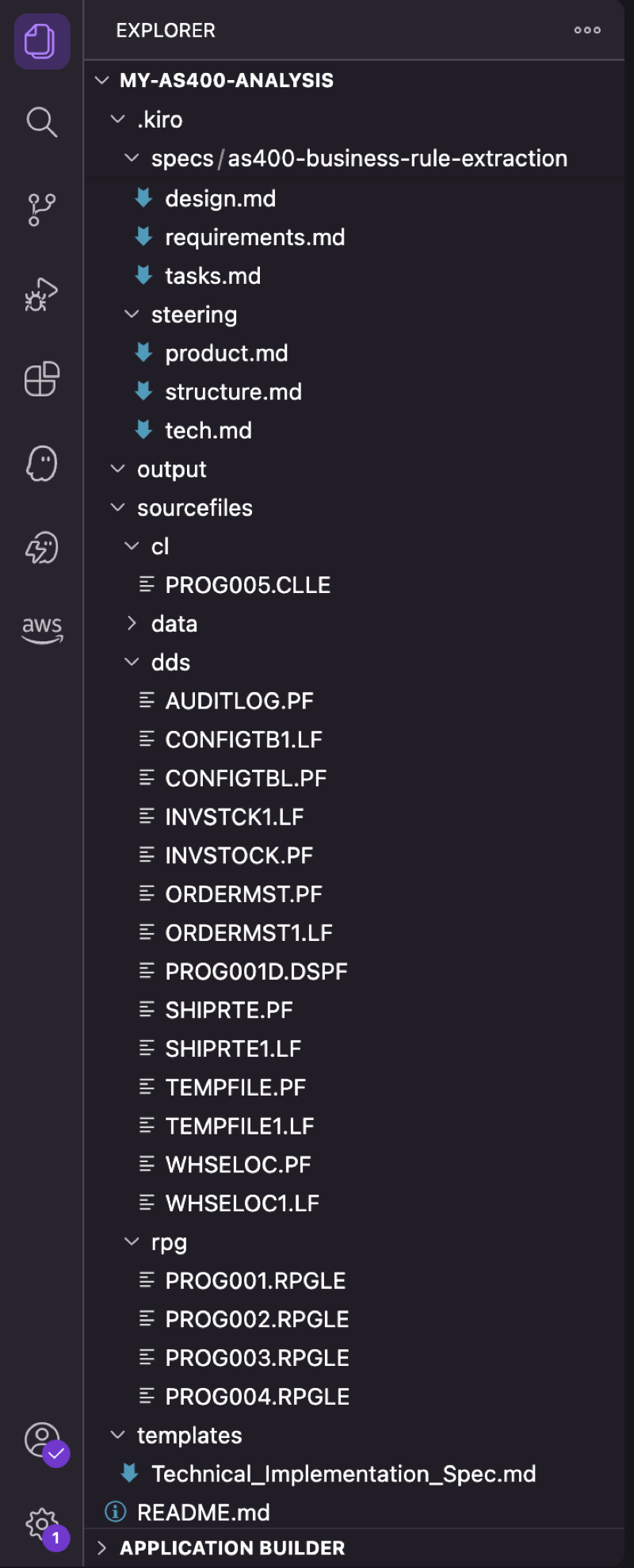
AS/400 business rule extraction no longer requires months of manual effort. Using Kiro, an agentic AI-powered development environment, this guide shows how to extract business rules from AS/400 RPG and COBOL programs, generate technical specifications, and produce modernization-ready documentation in days instead of months.
- Building a Slack-powered AI development agent with Kiro CLI and headless authentication
 by Vishal Karlupia on September 29, 2026 at 4:02 pm
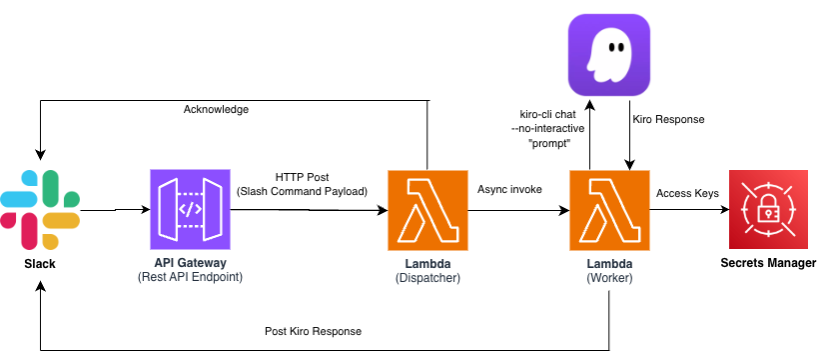
Every code review discussion, incident response thread, and standup happens in Slack. But when an engineer needs to analyze a service or debug a failing test, they leave Slack, open a terminal, navigate to the repository, run commands, and paste the output back. That round trip takes 30 seconds for someone who knows exactly where
- Accelerating development workflows with Kiro CLI as a Pre-Commit and Git Hook Agent
 by Vishal Karlupia on September 29, 2026 at 3:59 pm
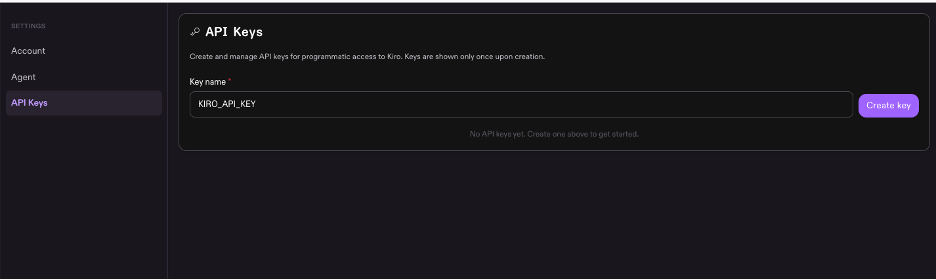
Code review feedback is most valuable when it arrives early. A security vulnerability caught in a pull request saves hours. The same vulnerability caught in production costs days. But what if you could catch it before the code even leaves the developer’s machine – at the time of git commit? Git hooks run automatically at
- How Property Finder automated incident management with AWS DevOps Agent
 by Nada Tlohi on September 28, 2026 at 7:03 pm
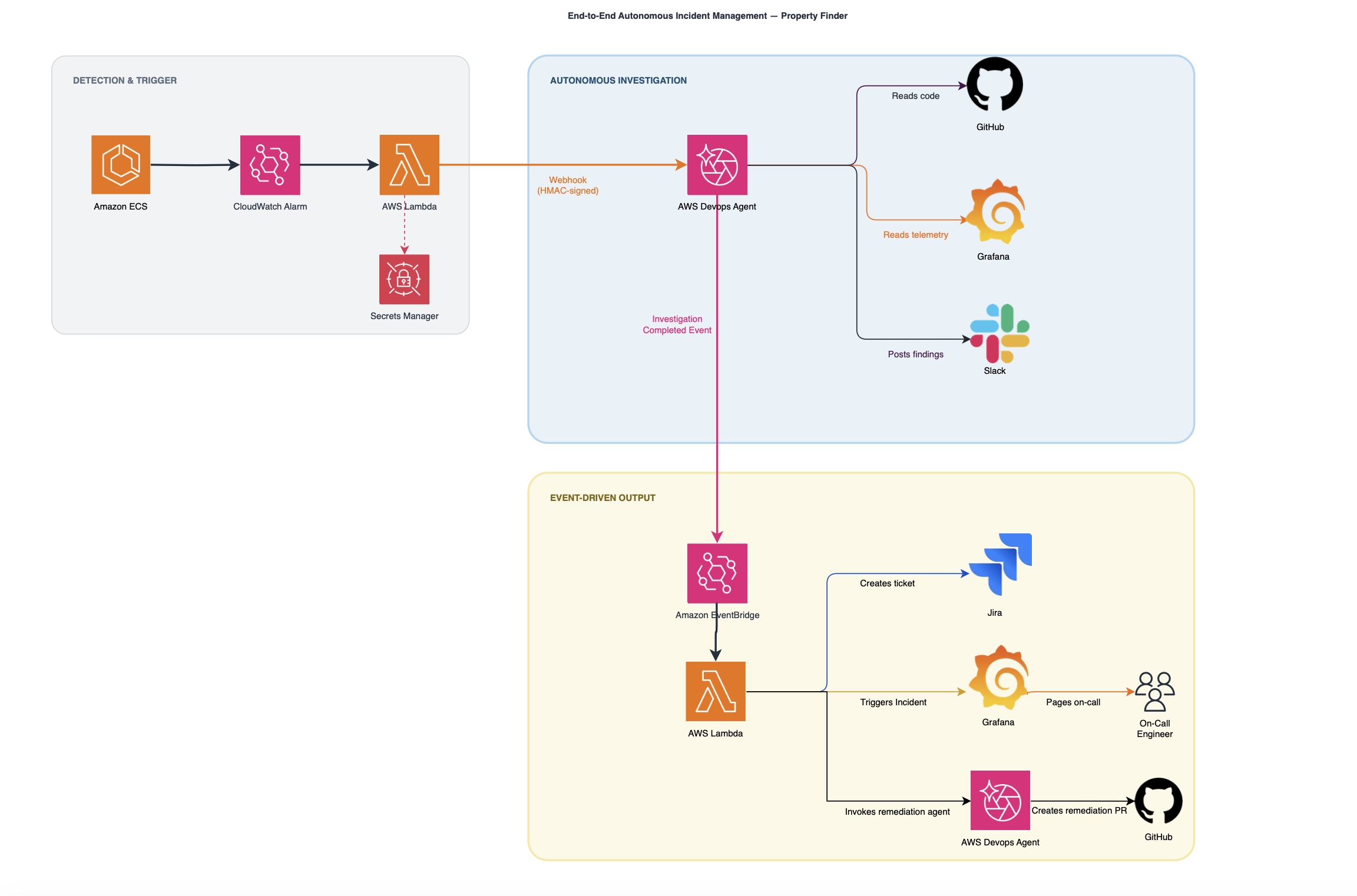
Property Finder built end-to-end autonomous incident management with AWS DevOps Agent. The full lifecycle, from alert to root cause analysis, Jira ticket, on-call page, and an auto-remediation pull request, completes in 14 minutes, down from 2 to 3 days for detection alone.
- Audit trails for autonomous agents with AWS DevOps Agent
 by Ben Peterson on September 28, 2026 at 4:07 pm
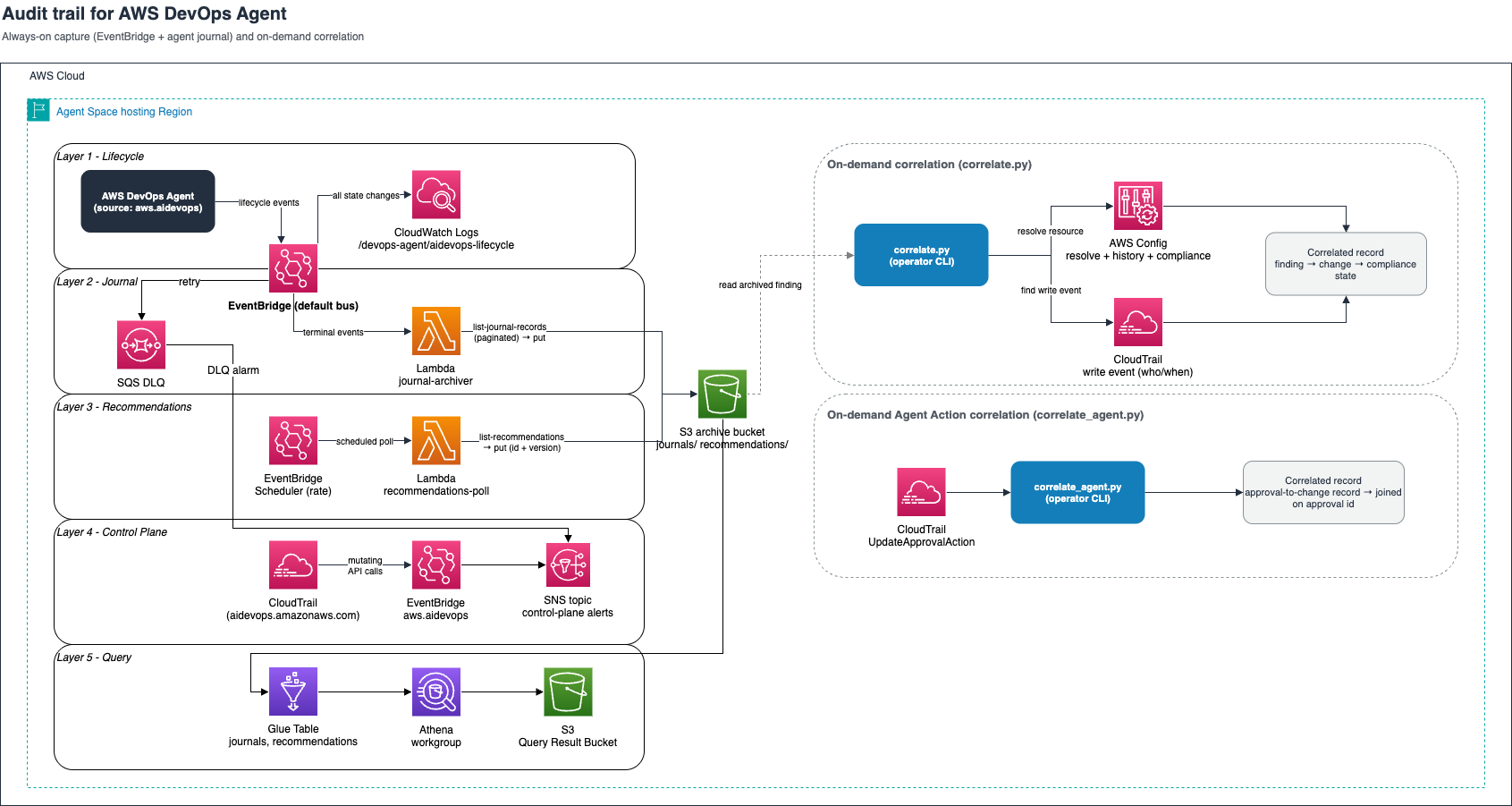
AWS DevOps Agent investigates production incidents and proposes or applies fixes on your behalf, raising two questions for every operation and security review: what did the agent do, and how do you understand its impact? Learn how to build a durable, low-maintenance audit trail using the agent journal, Amazon EventBridge lifecycle events, and AWS CloudTrail.
- Investigate DMS migration issues with AWS DevOps Agent
 by Chitresh Saxena on September 4, 2026 at 6:13 pm
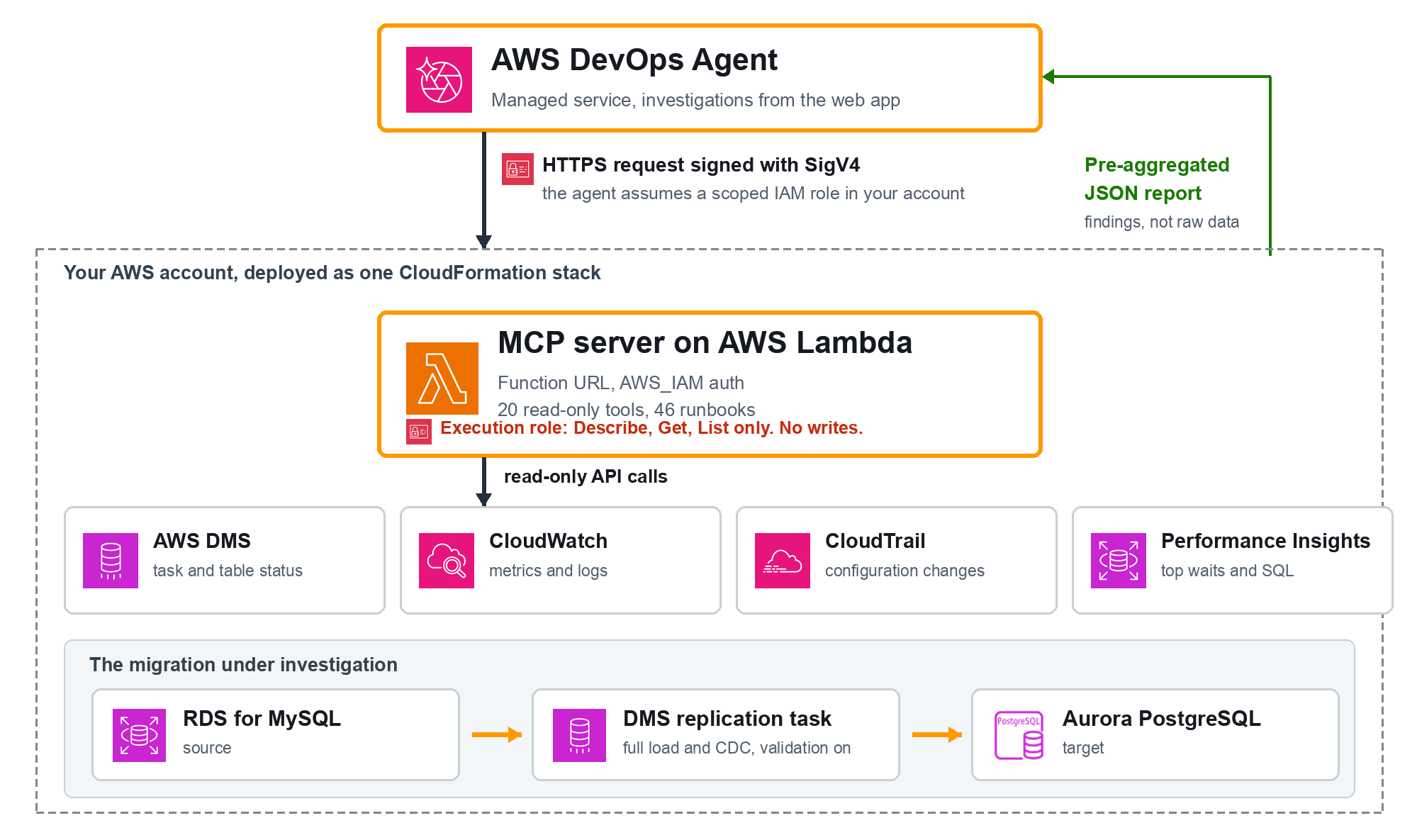
Migrating a production database is a high-risk operational event. AWS DMS is a cloud service that migrates relational databases, data warehouses, and other data stores into the AWS Cloud or between environments. It moves the rows reliably, but the failures that page an on-call engineer rarely happen during the data copy. They occur in the
- Automating the Experimentation Lifecycle with Kiro, AWS DevOps Agent, and LaunchDarkly
 by Greg Eppel on September 3, 2026 at 2:11 am
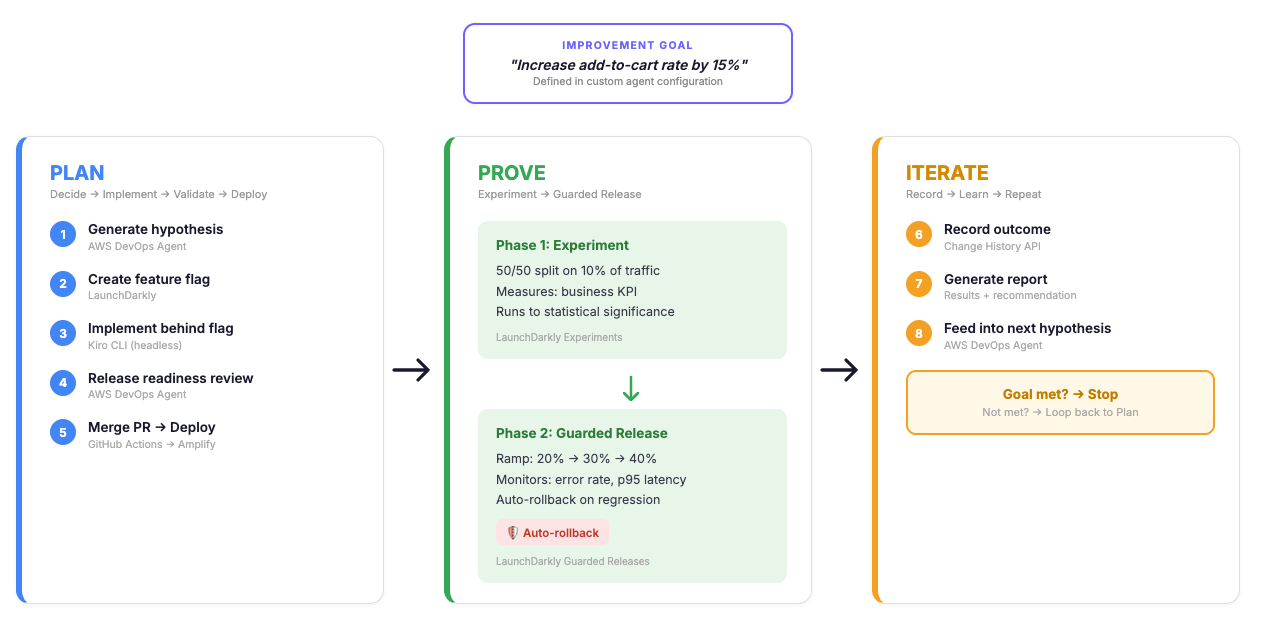
Introduction Continuous improvement depends on experimentation. Teams know that the fastest path to better outcomes is to test changes against real user behavior, measure results, and iterate. In practice, sustaining that cycle is slow and costly because the overhead compounds with each attempt. Three barriers slow teams down: 1. Planning cost — Turning a proposed
- Automate planned lifecycle upgrades with AWS DevOps Agent and Kiro
 by Nehal Sangoi on September 2, 2026 at 6:55 pm
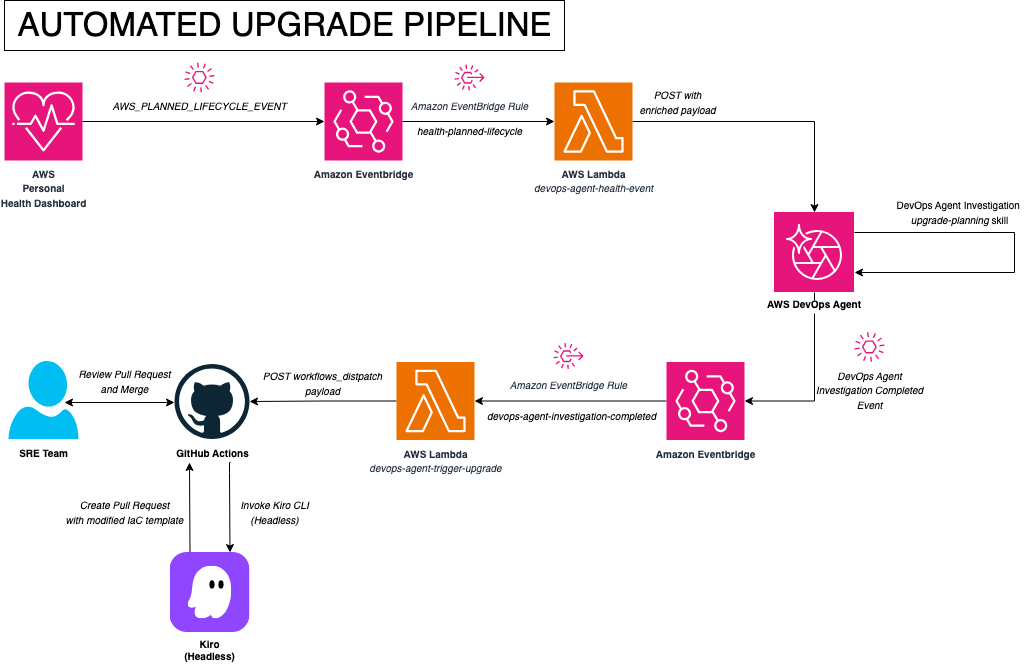
AWS Health Planned Lifecycle Events signal when a managed service version is nearing end of standard support. Learn how to automate these upgrades end to end with AWS DevOps Agent and Kiro: detect the event, investigate the upgrade path, apply validated code changes, and open a pull request for human review.
- Optimize EKS operations with agents: Reduce MTTR with AWS DevOps Agent and a Kubernetes Operator
 by HoSeong Lee on August 31, 2026 at 9:28 am
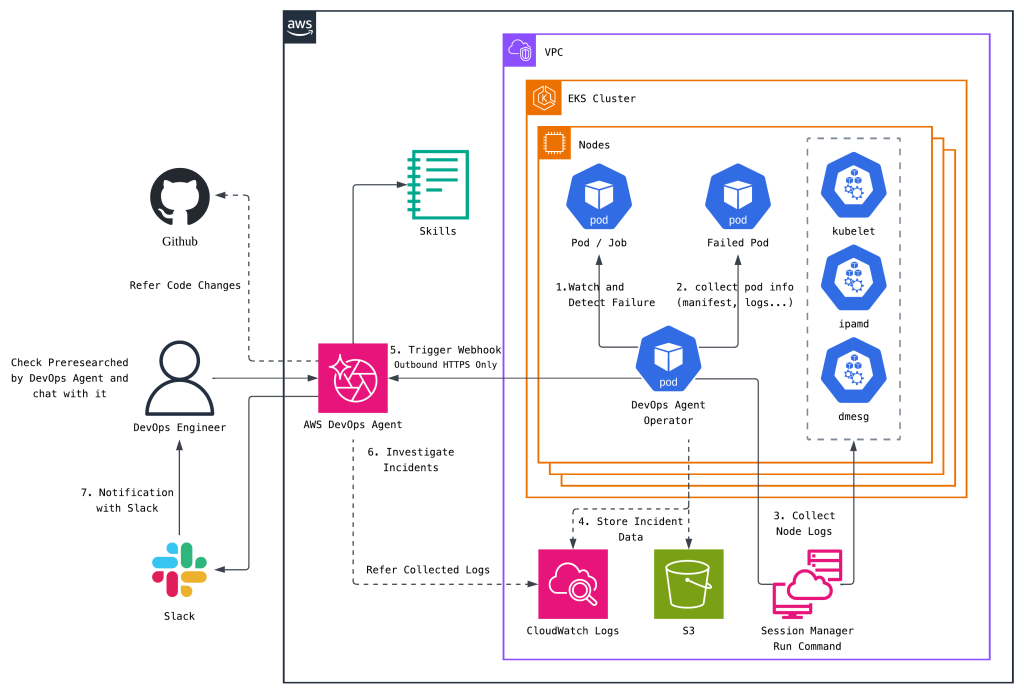
Introduction Running workloads on Amazon Elastic Kubernetes Service (Amazon EKS) can involve managing failures like OOMKilled or IP exhaustion. Engineers must repeatedly collect pod logs, trace events, and check node logs—a process that slows at night/weekends, with critical data lost when pods are deleted or nodes become unhealthy. This collection phase is pure overhead on
- Build your own continuous modernization pipeline with AWS Transform custom
 by Janardhan Molumuri on August 28, 2026 at 1:27 pm
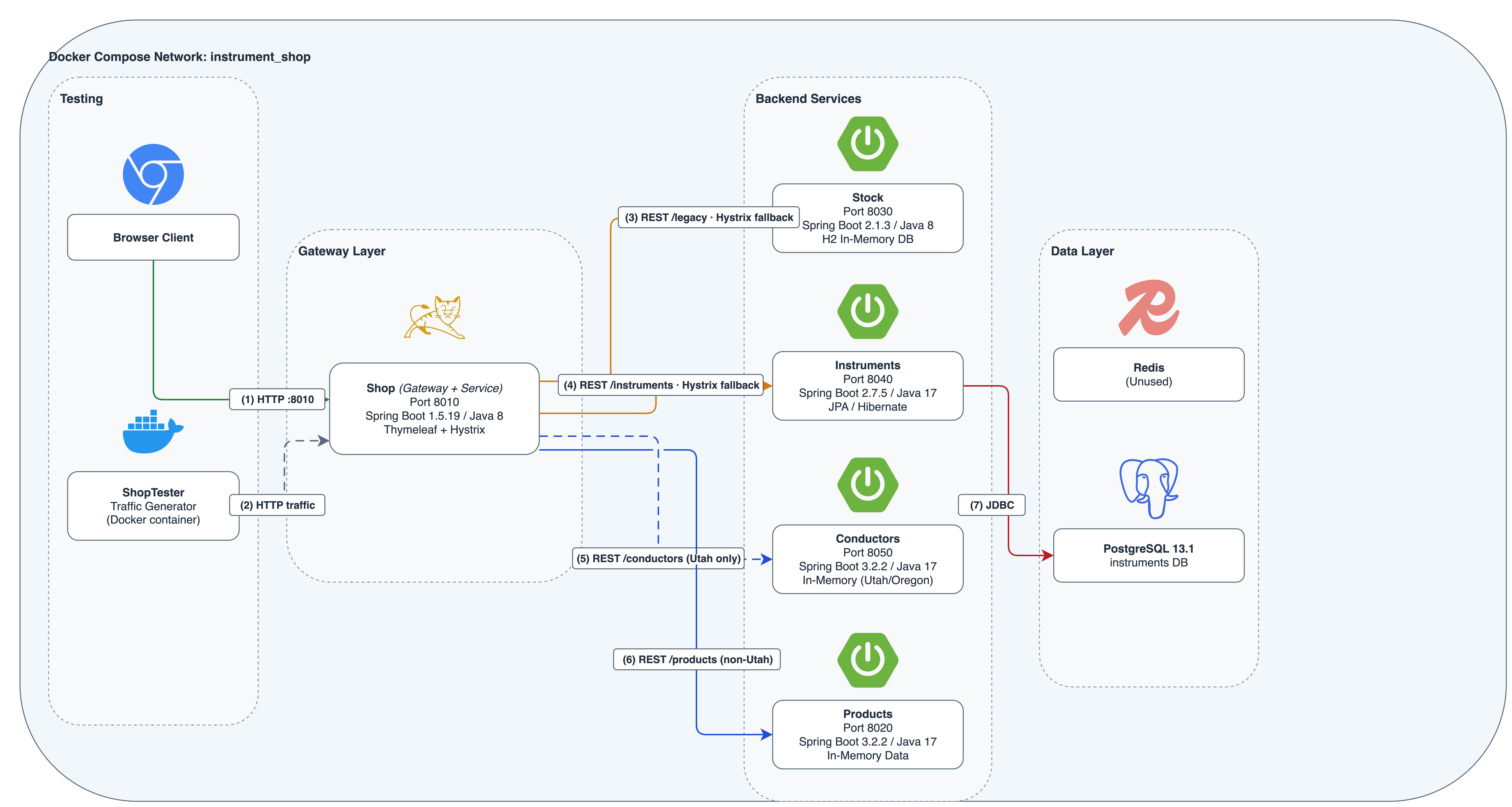
Introduction Development velocity has reached new heights with AI-driven development tools and practices. Organizations are generating code faster than ever before. But that speed carries risk. Researchers Anderson, Parker, and Tan warned in MIT Sloan Management Review, “Legacy systems tend to carry hidden debt; layering AI-generated code on top of them creates additional tangled dependencies.”
- AI-driven software delivery with Kiro, AWS DevOps Agent and Bluebox by Dynatrace
 by Philipp Ushiromiya on August 26, 2026 at 12:59 pm
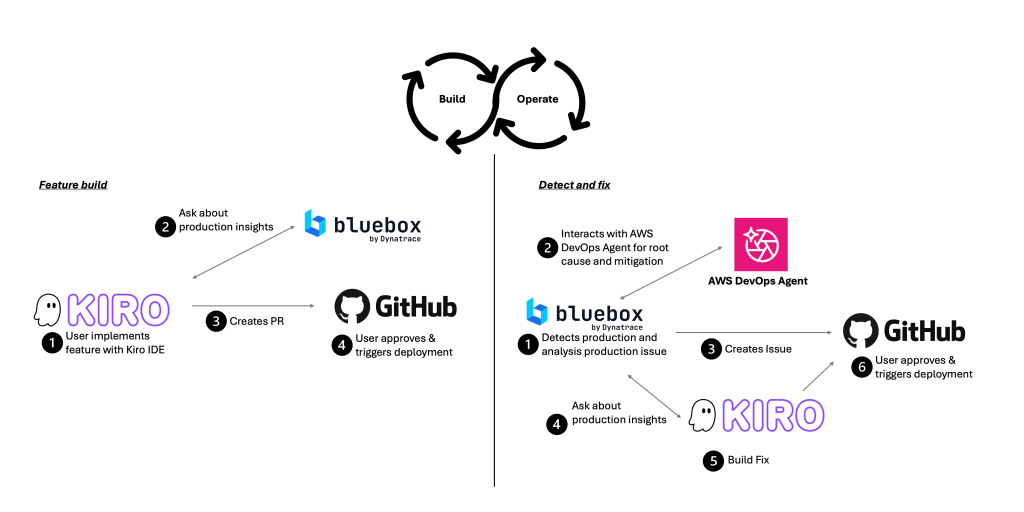
This post was co-written with Michael Stephan, Senior Principal Product Manager, and Christian Kreuzberger, Principal Software Engineer, at Dynatrace. AI-driven software delivery changes how code gets written, but not what production demands of it. A generated change still has to fit the traffic your service receives, the dependencies it calls, and the capacity limits it
- From clickops to governed IaC: CloudFormation drift detection in practice
 by Leen Alattas on August 21, 2026 at 10:48 am
AWS environments that have grown organically over time often share a common characteristic: infrastructure provisioned through the AWS Management Console, SDKs, or CLI without corresponding Infrastructure as Code (IaC) templates. This practice is commonly referred to as “ClickOps,” a term describing any infrastructure change made outside of a codified, version-controlled workflow. Whether changes happen through
- Streamline your GitHub journey with AWS CodePipeline and AWS DevOps Agent
 by Anjani Reddy on August 17, 2026 at 1:25 pm
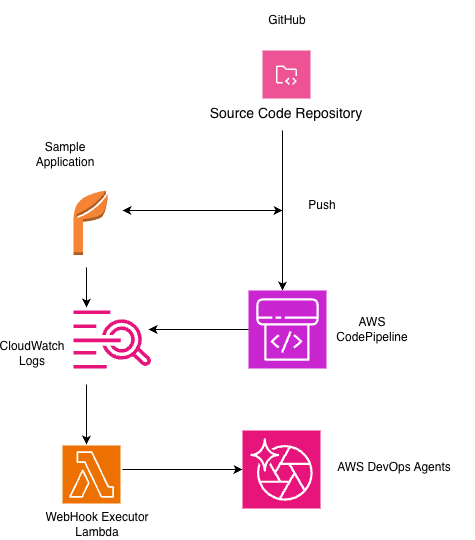
Introduction When CI/CD deployment failures occur for GitHub hosted applications, AWS DevOps Agent reduces the hours that Development and Site Reliability Engineering (SRE) teams typically spend manually investigating across multiple AWS services, logs, and pipeline stages. This process delays critical deployments and impacts software delivery velocity. This is especially true when teams need to correlate data between GitHub commit histories, AWS CodePipeline execution logs, and Amazon
- Extending AWS Transform custom with MCP Servers for End-to-End Code Modernization
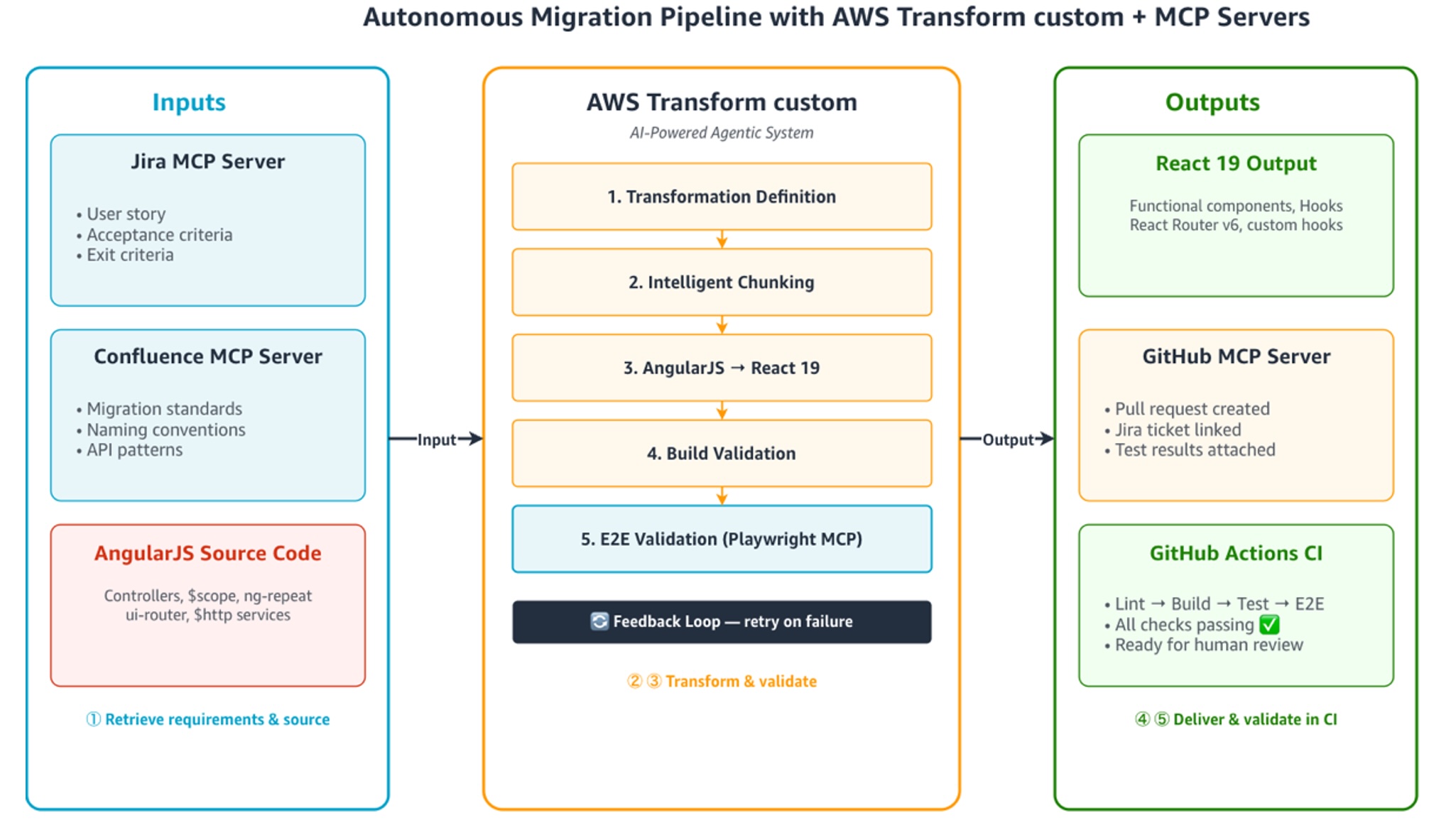 by Sureshkumar Natarajan on August 12, 2026 at 12:55 pm
Automating migration pipelines shifts valuable resources toward innovation. In this post, we will help you learn how to extend AWS Transform custom with Model Context Protocol (MCP) server integrations that connect project management, automated testing, and source control. You will discover how turning a code transformation tool into an automated migration pipeline can take you
- Automate SageMaker HyperPod incident triage and root-cause-analysis with AWS DevOps Agent
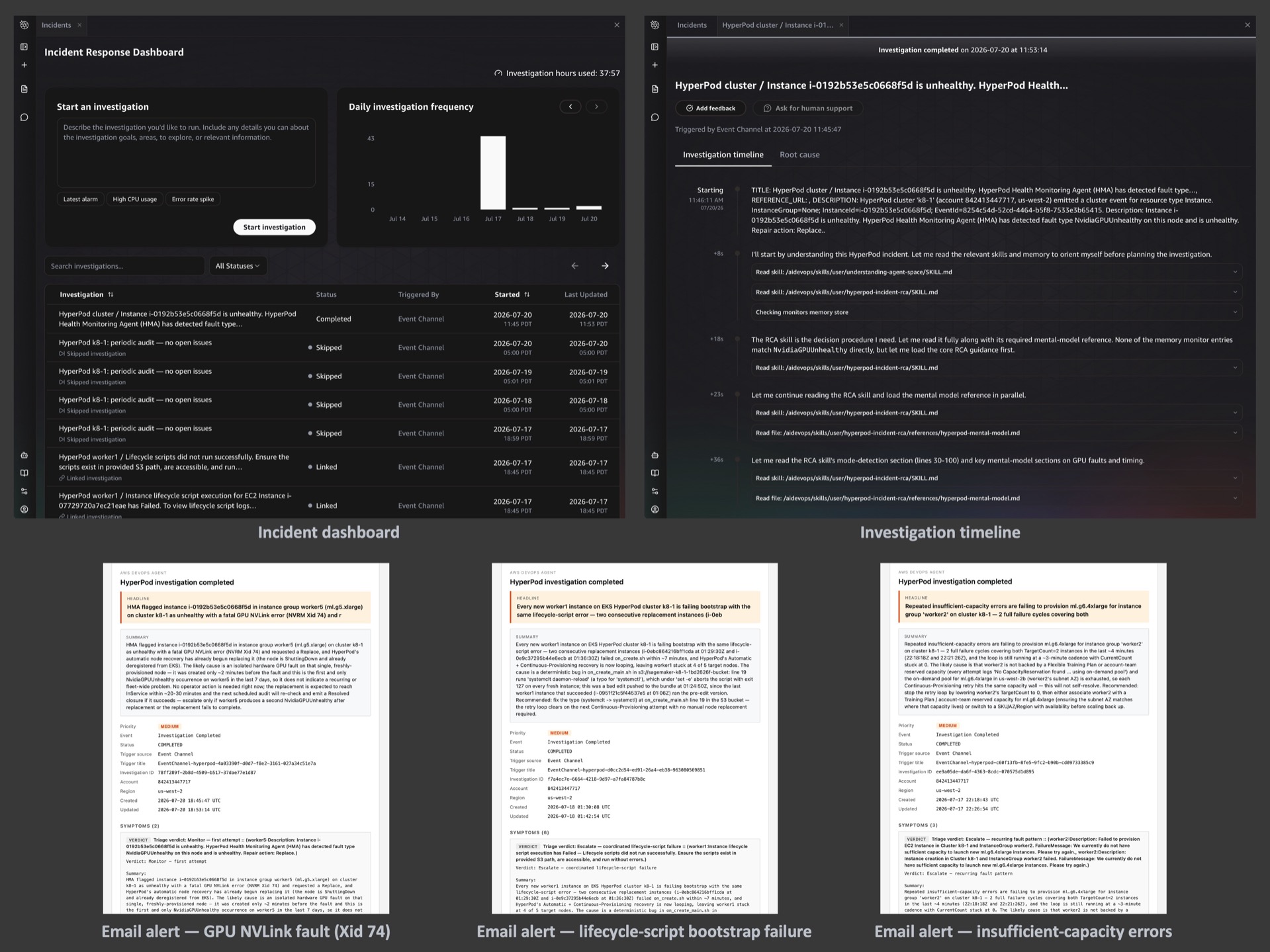 by Tomonori Shimomura on August 10, 2026 at 11:29 am
Introduction Large-scale machine learning workloads: training, fine-tuning, and inference run on clusters of hundreds to thousands of GPU instances for days or weeks at a stretch. Keeping operational visibility across a fleet of this size is a constant challenge: hardware health events, node lifecycle transitions, capacity fluctuations, and workload-level issues appear in the event stream around

AWS DevOps
We are an ethical website cyber security team and we perform security assessments to protect our clients.