

Microsoft Research.
- Proof-based general-purpose computing with Magnetar
 by Srinath Setty on October 15, 2026 at 4:00 pm
Zero-knowledge proofs can verify computing results without rerunning workloads or exposing sensitive data. Magnetar helps bring them into the mainstream with support for standard programming languages, major speed gains, and quantum-resistant security. The post Proof-based general-purpose computing with Magnetar appeared first on Microsoft Research.
- Simulating student learning for better AI tutoring
 by Ke Yang, Chenglong Wang, Michel Galley, Jeevana Priya Inala, ChengXiang Zhai, Jianfeng Gao on October 12, 2026 at 4:00 pm
StudentSim is a research system for evaluating and improving AI tutoring tools before they are tested with learners. It models how individuals may engage with tutors, giving feedback to improve tutor performance across subjects like chess, writing, and mathematics. The post Simulating student learning for better AI tutoring appeared first on Microsoft Research.
- Agent Lightning v1.0: A 3,500-Line Lightweight Agentic RL Framework for Training Agents with Real Harnesses
 by Zhiyuan He, Yuqing Yang on October 7, 2026 at 4:00 pm
Training AI agents with reinforcement learning can be challenging because their tools, context, and decision-making are managed by complex frameworks. Agent Lightning connects existing agents to RL training, making it easier to improve them without rebuilding them. The post Agent Lightning v1.0: A 3,500-Line Lightweight Agentic RL Framework for Training Agents with Real Harnesses appeared first on Microsoft Research.
- What AI gets wrong and what failure teaches us
 by Chad Atalla, Jennifer Neville on October 6, 2026 at 4:19 pm
Jennifer Neville did not want to go into computer science—but that’s exactly where she landed. Neville discusses the starts and stops that led to her professional sweet spot and her work identifying “surprising failures” making it hard for AI to handle complexity. The post What AI gets wrong and what failure teaches us appeared first on Microsoft Research.
- Forecasting space weather risks on power grids
 by Rohan Kannan on September 30, 2026 at 4:00 pm
Extreme space-weather events can damage power systems on Earth and degrade GPS accuracy and satellite operations. A new machine learning system can predict where damage is likely to occur 30-60 minutes before a storm arrives. The post Forecasting space weather risks on power grids appeared first on Microsoft Research.
- Introducing Quine: An AI research system designed for the complexity of biology
 by Nicolo Fusi, Jonathan M. Carlson on September 29, 2026 at 2:00 pm
Biology doesn’t operate in silos, and neither should the AI representation of it. Quine is an early-stage research effort to create a multimodal world model of biology. By connecting insights across biological scales and modalities, Quine helps scientists computationally search a space far larger than intuition allows and prioritize hypotheses before they reach the lab. Experimental results provide important feedback, helping researchers sharpen future research directions. The post Introducing Quine: An AI research system designed for the complexity of biology appeared first on Microsoft Research.
- One year in: How Microsoft Research Asia – Singapore is advancing research, partnership and talent for real-world impact
 by Microsoft Research Team on September 28, 2026 at 9:00 pm
Since launching a year ago, the Microsoft Research Asia — Singapore lab has established a strong foundation, deepened collaboration across government, academia, and industry, and explored how frontier AI research can create real-world value. The post One year in: How Microsoft Research Asia – Singapore is advancing research, partnership and talent for real-world impact appeared first on Microsoft Research.
- Offloaded inference for real-world physical AI robotics
 by Ganesh Ananthanarayanan, Matthew Balkwill, Xenofon Foukas, Sanjeev Mehrotra, Bozidar Radunovic, Connor Settle, Ankit Verma, David White, Shawn Cicoria, Mark Martin, Rachel Johnson, Mayur Patel on September 23, 2026 at 4:01 pm
Robots are getting smarter, but how can their hardware match that growth? New Microsoft Research findings show that moving AI inference beyond the robot can improve task success, boost efficiency, and support more advanced physical AI workloads. The post Offloaded inference for real-world physical AI robotics appeared first on Microsoft Research.
- Improving synthesis prediction of small molecules at scale with RetroChimera
 by Felix Pultar, John Gardner, Guoqing Liu, Marwin Segler on September 21, 2026 at 3:30 pm
Custom-made molecules are advancing medicine, materials, and agriculture, but producing them is slow and expensive. A new Nature paper highlights RetroChimera, a predictive model that helps accelerate chemical synthesis, helping researchers explore a wide range of molecules. The post Improving synthesis prediction of small molecules at scale with RetroChimera appeared first on Microsoft Research.
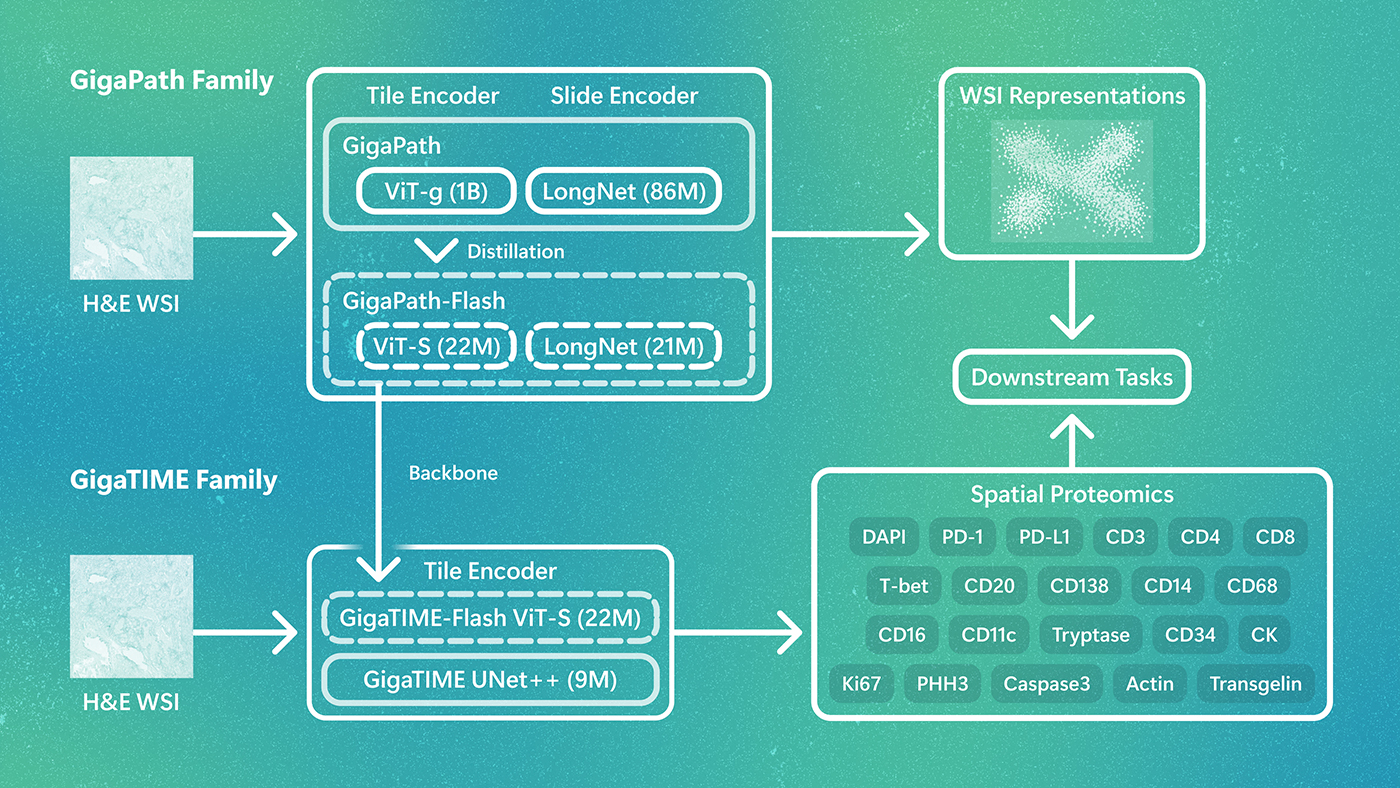
- GigaPath-Flash and GigaTIME-Flash: Toward population-scale discovery with efficient pathology foundation models
 by Naoto Usuyama, Jeya Maria Jose Valanarasu, Tristan Naumann on August 31, 2026 at 4:00 pm
What if pathology foundation models could do more with less? GigaPath-Flash and GigaTIME-Flash cut computational demands while maintaining strong performance, opening the door to larger studies and broader exploration. The post GigaPath-Flash and GigaTIME-Flash: Toward population-scale discovery with efficient pathology foundation models appeared first on Microsoft Research.