

AWS Security Blog The latest AWS security, identity, and compliance launches, announcements, and how-to posts.
- AWS Security Agent (now part of AWS Continuum) exploited 33 of 37 new real-world CVEs
 by Dazhi Zhang on October 15, 2026 at 4:10 pm
We applied AWS Security Agent (now part of AWS Continuum), our autonomous penetration-testing agent, to 37 real, recently disclosed Common Vulnerabilities and Exposures (CVEs), each packaged as a live, containerized target with a flag hidden at the vulnerability’s intended sink. Starting from an unauthenticated or low-privilege position (an endpoint URL and a one-line hint, no
- Penetration testing every deployment with AWS Continuum
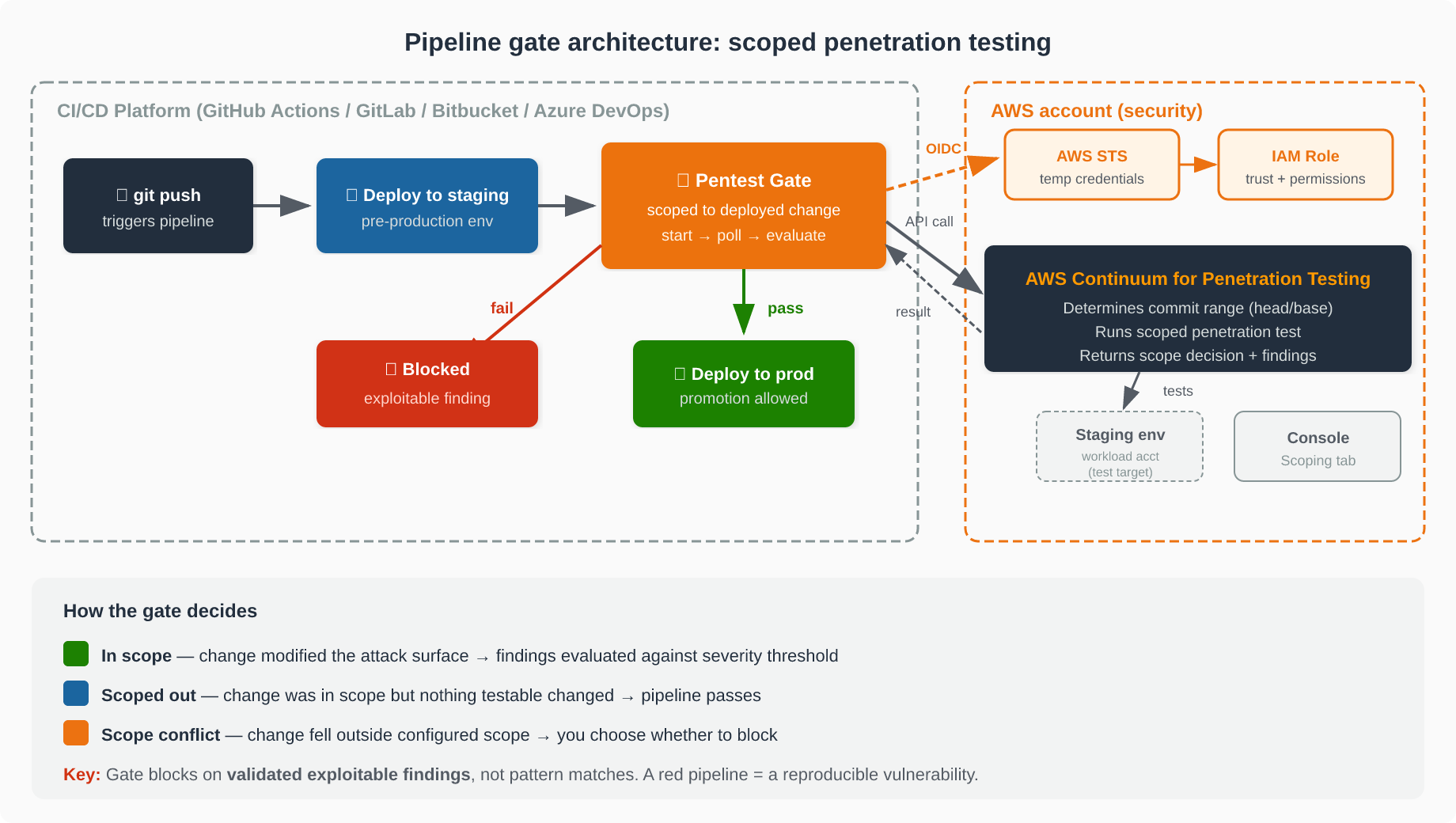 by Jigar Bhatt on October 14, 2026 at 8:21 pm
Most security tooling that fits into a CI/CD pipeline—static analysis (SAST), software composition analysis (SCA), and dynamic scanners (DAST)—flags potential issues from patterns and signatures. A flagged pattern shows you where to look; penetration testing is what confirms whether something is actually exploitable. That confirmation has traditionally come from a periodic, out-of-band engagement that runs
- Part 2 – Cybersecurity journeys: What even is this job?
 by Shannon Brazil on October 13, 2026 at 8:58 pm
If you’ve ever looked at a list of cybersecurity jobs and felt like none of them fit you, you might just be looking at a short list. Most career guides cover the same few roles, like the analyst watching alerts or the pen tester (penetration tester, someone hired to legally break into systems to find
- GuardDuty Extended Threat Detection has added five new indicators to surface attack sequences
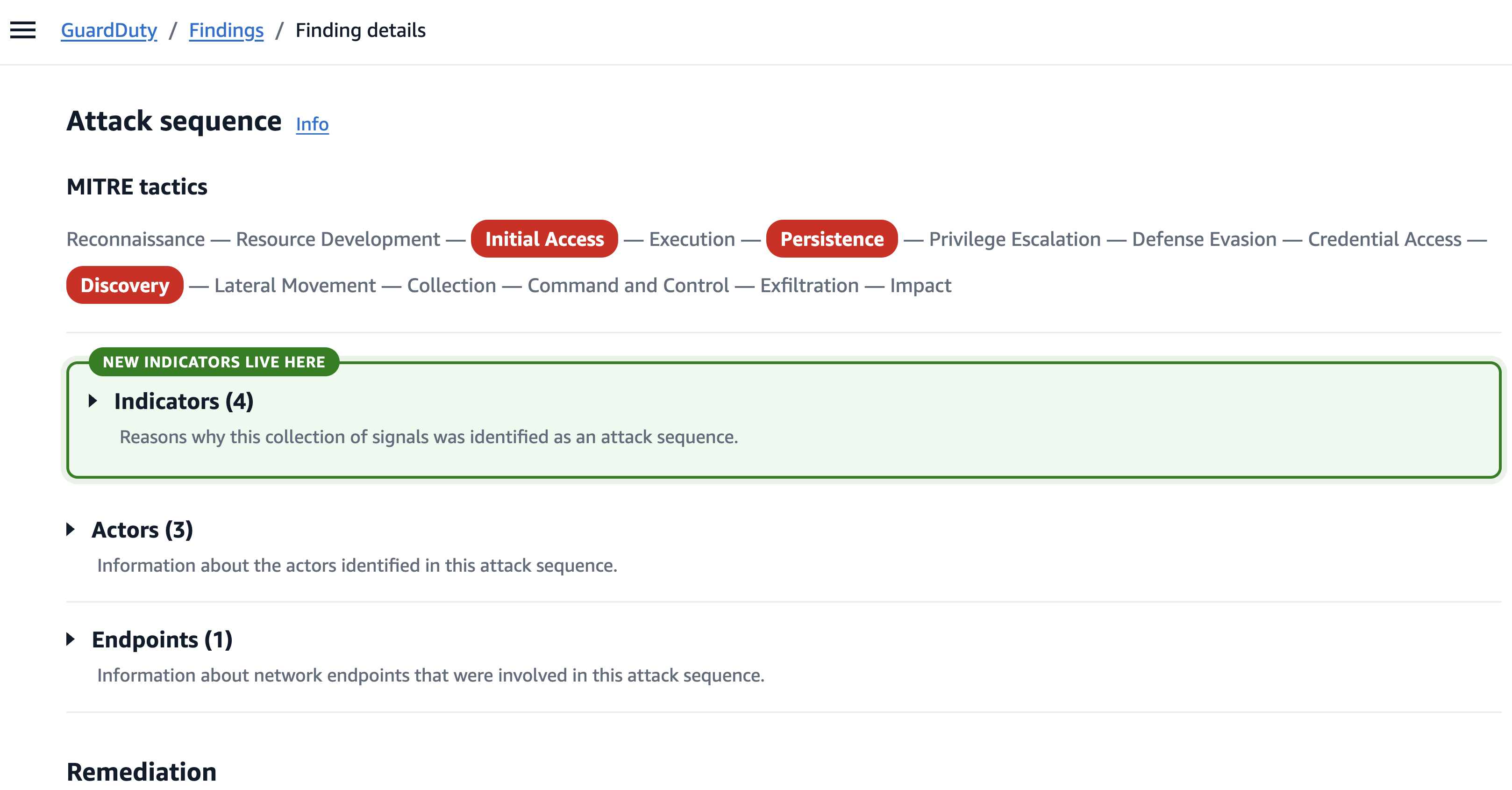 by Aman Khare on October 12, 2026 at 9:58 pm
Amazon GuardDuty Extended Threat Detection correlates weak GuardDuty signals into a single, critical-severity attack sequence finding when their composition crosses a threshold of credibility. On May 20, 2026, the service started attaching five new indicator types to those sequences: MALICIOUS_PACKAGE, MISCONFIGURATION, REACHABILITY, SENSITIVE_DATA, and VULNERABILITY. For more information, see Document history for Amazon GuardDuty and
- Quantum-resistant signing on AWS, Part 2: Enforce your ML-DSA algorithm policy with SCPs and IAM
 by Harshvardhan Chunawala on October 12, 2026 at 8:13 pm
You want to set a cryptographic algorithm policy and stop non-compliant choices from being made in your Amazon Web Services (AWS) environment. This post shows you how. As you adopt post-quantum cryptography, one of the first decisions you face is which algorithms and parameter sets fit your business needs, balancing security against signature size, key
- Quantum-resistant signing on AWS, Part 1: Build a software supply chain with ML-DSA
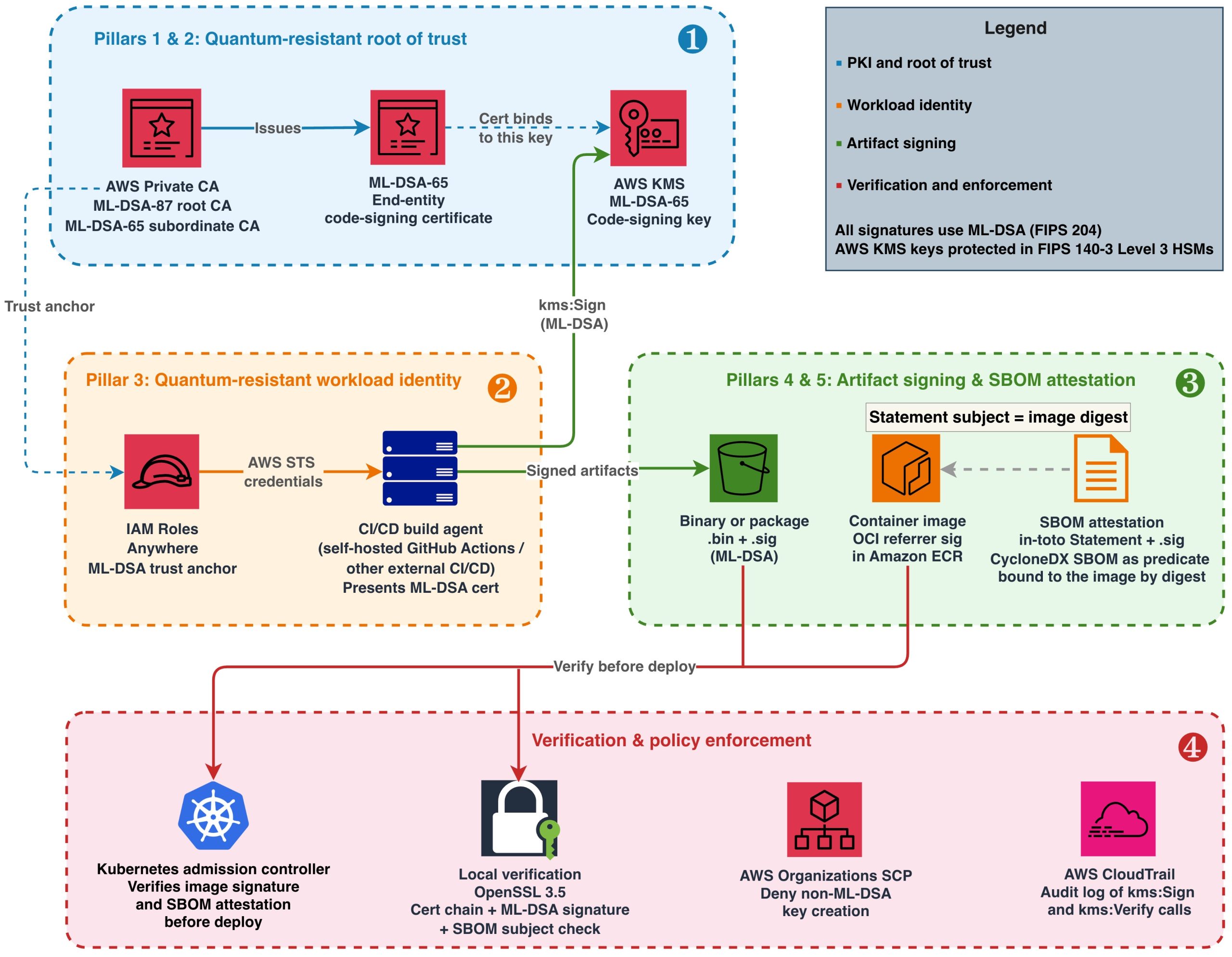 by Harshvardhan Chunawala on October 12, 2026 at 8:12 pm
Software supply chain attacks have grown in both frequency and sophistication. Recent high-profile compromises of build systems and open source dependencies demonstrate that attackers increasingly target the trust mechanisms that verify software integrity. Those trust mechanisms rely on digital signature algorithms, and today many use traditional algorithms such as Rivest-Shamir-Adleman (RSA) and the Elliptic Curve
- Configuring your AI vulnerability harness, Part 2: The steering file
 by Justin Kontny on October 7, 2026 at 9:49 pm
This post shows you how to configure an AI model to perform structured, evidence-based vulnerability triage with the consistency of a seasoned security analyst. You’ll learn the design decisions behind five configuration sections that enforce structural verification, evidence-based scoring, and infrastructure-aware prioritization across every analysis session. Our companion post—Building your AI vulnerability harness—covered the architecture;
- Building your AI vulnerability harness, Part 1
 by Nidhi Ramakant on October 7, 2026 at 9:49 pm
Vulnerability scanners produce findings faster than manual triage can process them. Your developers ship more code with more dependencies, and the volume of candidate findings grows with it. Many findings a scanner produces are unlikely to be exploited. The ones that matter need to reach an engineer fast, with enough evidence that they can act
- Part 1 – Cybersecurity journeys: I didn’t plan this
 by Shannon Brazil on October 7, 2026 at 4:21 pm
If you’ve ever wondered whether your background qualifies you for a career in cybersecurity, you’re not alone — and you’re probably more prepared than you think. My name is Shannon Brazil, and I work in security communications at Amazon Web Services (AWS). I have been in the security space for over a decade, and my
- Improving SPIRE security and resiliency with AWS managed services
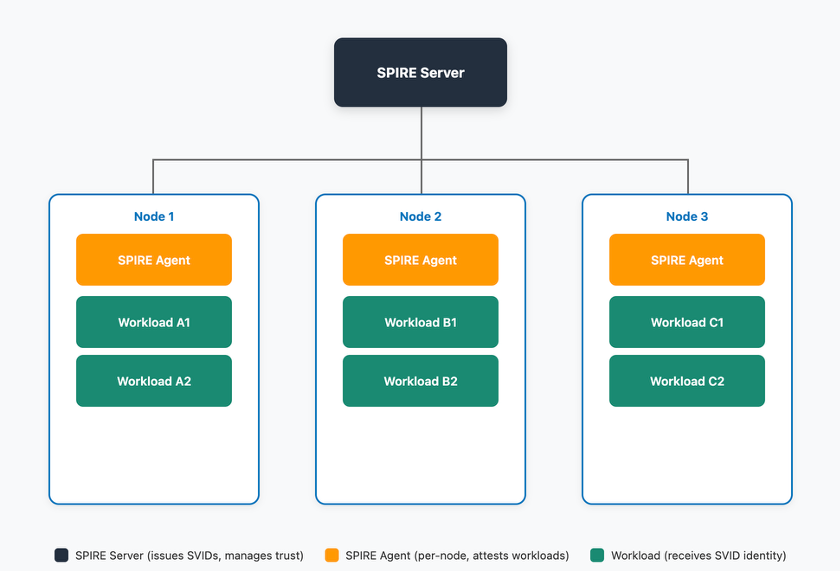 by Brendan Paul on October 6, 2026 at 6:52 pm
In cloud-centered environments, establishing trust between workloads is fundamental to securing machine-to-machine communication. Traditional approaches such as API keys, shared secrets, and static service account credentials weren’t designed for the scale and ephemeral nature of cloud workloads. This drives an organizational need to shift from long-term, static credentials to short-lived cryptographic workload identities. Organizations are
- Identity-aware AI data agents with AWS Lake Formation and Trusted Identity Propagation
 by Thiyagarajan Mani on October 6, 2026 at 4:07 pm
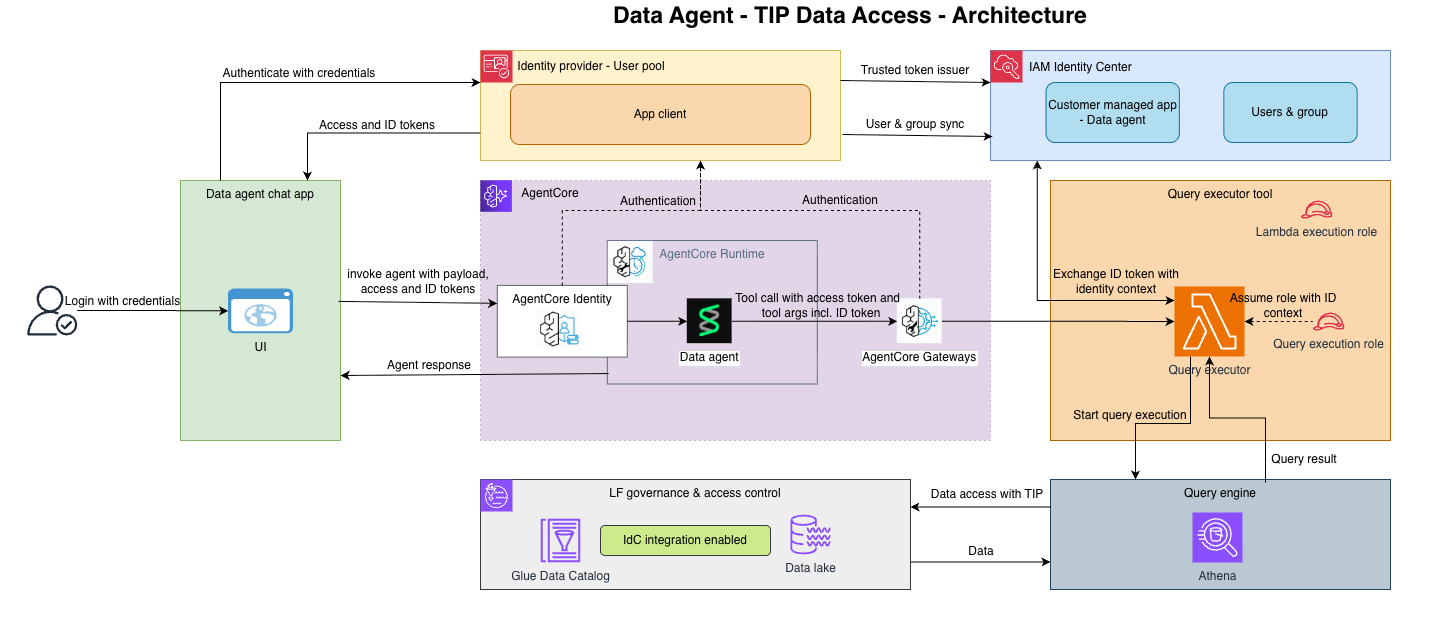
You’re building a data agent that lets business users ask questions about lakehouse data in natural language. You’ve already built governance policies that control who can access which datasets. The challenge is making the agent respect those rules without rebuilding them in your application code. When a user asks a question, the agent maps it
- AWS Continuum sets a new standard in autonomous code security
 by Alexander Greaves-Tunnell on October 5, 2026 at 9:41 pm
As AI models become more capable, they uncover more security vulnerabilities and identify increasingly sophisticated paths to exploit them, raising the bar for how quickly defenders must respond. Security teams now face more potential vulnerabilities than their existing processes were designed to handle — each requiring investigation, reproduction, and a repair that must be tested
- AWS European Sovereign Cloud: Demonstrating an independent operation
 by Stéphane Israël on September 28, 2026 at 5:05 pm
On Saturday, October 24, 2026, we will conduct an exercise demonstrating that the AWS European Sovereign Cloud can operate without depending on any infrastructure outside of the European Union (EU). For several hours, the AWS European Sovereign Cloud will operate without a connection to the AWS Global Network backbone. The backbone is the private network
- ICYMI: August 2026 @AWS Security
 by Rodolfo Brenes on September 23, 2026 at 11:07 pm
Read all about the latest AWS security features, compliance updates, and hands-on resources in our monthly digest posts. You’ll find expert blog posts, new service capabilities, code samples, and workshops. AWS Security Blog posts August brought 20 AWS Security Blog posts organized across seven categories. Identity and access management led the month with five posts
- Supporting ASD’s multi-factor authentication campaign: Why MFA matters more than ever
 by Grace Zhang on September 23, 2026 at 2:45 pm
The Australian Signals Directorate (ASD) has this month issued a clear call to action through its Multi-factor authentication: Switch it on campaign, urging businesses, organisations, and individuals to enable multi-factor authentication (MFA) across their online accounts. At AWS, we strongly support this message. As threat actors continue to target credentials through phishing, credential stuffing, and
- Transforming Bedrock Guardrails events into OCSF with CloudWatch
 by Dhananjay Karanjkar on September 21, 2026 at 3:33 pm
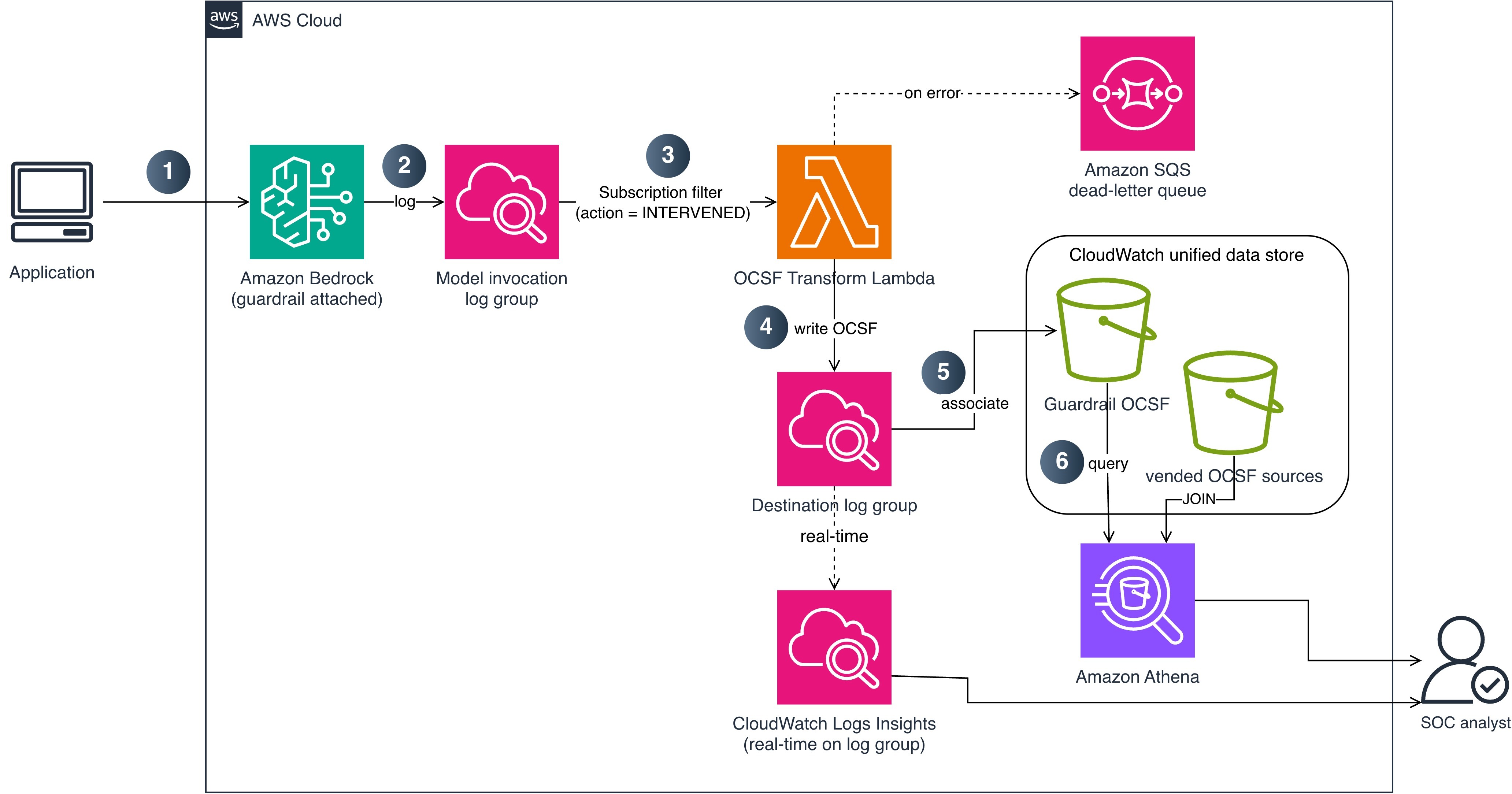
Security teams investigating possible AI-related security events need guardrail intervention data alongside their existing security telemetry. When a guardrail identifies or blocks a prompt injection attempt or redacts sensitive data, that intervention carries additional investigative value comparable to a failed sign-in or a network intrusion alert. AWS Bedrock publishes this telemetry to AWS CloudWatch metrics
- Run open weight models on Amazon Bedrock in AWS European Sovereign Cloud
 by Marta Taggart on September 17, 2026 at 9:19 pm
European organizations can run AI workloads on Amazon Web Services (AWS) while keeping data within the European Union (EU) and meeting regulatory requirements. You can now run generative AI workloads on open weight models on Amazon Bedrock in the AWS European Sovereign Cloud. We’re excited to announce the general availability of the first open weight
- Architecting a secure landing zone in the AWS European Sovereign Cloud
 by Pablo Pagani on September 16, 2026 at 9:20 pm
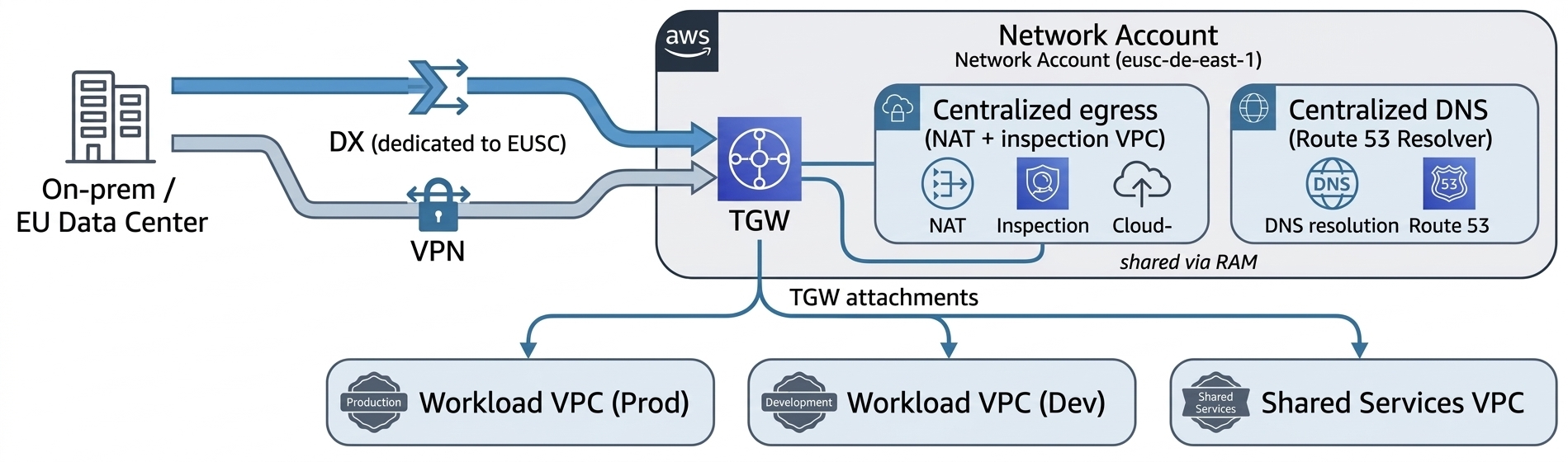
The AWS European Sovereign Cloud is a new, independent cloud for Europe, physically and logically separate from existing AWS Regions and operated within the European Union (EU). It provides the same services, features, and APIs as AWS commercial Regions, but runs as a distinct AWS partition (aws-eusc), with its own control plane, AWS Identity and
- AWS STS simplifies session token size limits and adds session token size monitoring
 by Rishi Tripathy on September 15, 2026 at 10:21 pm
AWS Security Token Service (AWS STS) has simplified session token size limits, giving you more room for your session policies and session tags. STS has replaced the packed policy size and the overall session token size limits with a single token size limit of 4,096 bytes. STS now reports session token size in API responses,
- Architecting resilient authentication with Amazon Cognito multi-Region replication
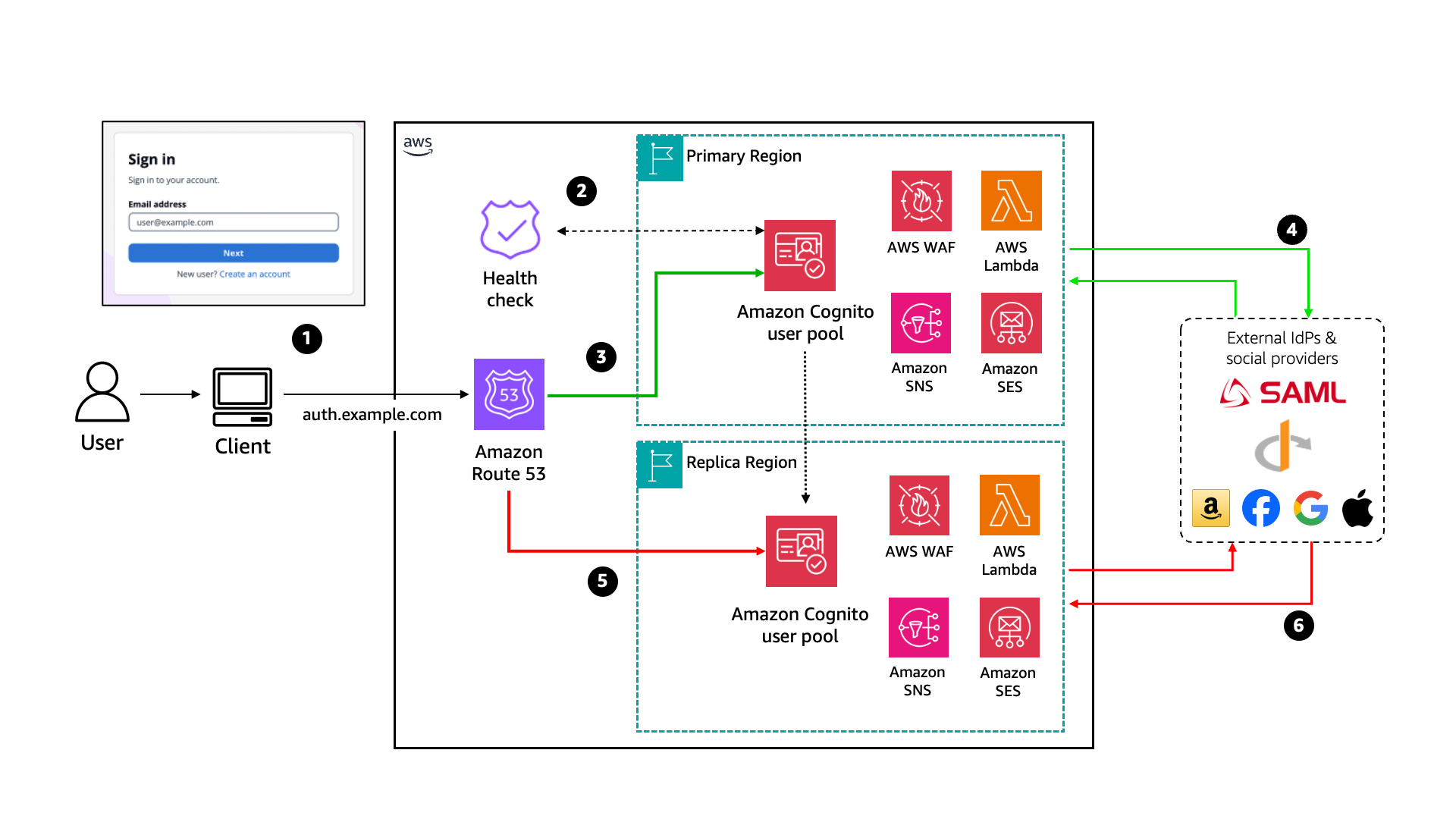 by Abrom Douglas on September 15, 2026 at 7:00 pm
Your consumer identity and access management (CIAM) system is the foundation of your customer experience. It’s how users sign in, access services, and engage with your applications. As your business scales across geographies, ensuring authentication is always available becomes a core architectural requirement. However, building multi-Region authentication has traditionally required complex custom replication solutions that
